
The Quick Answer
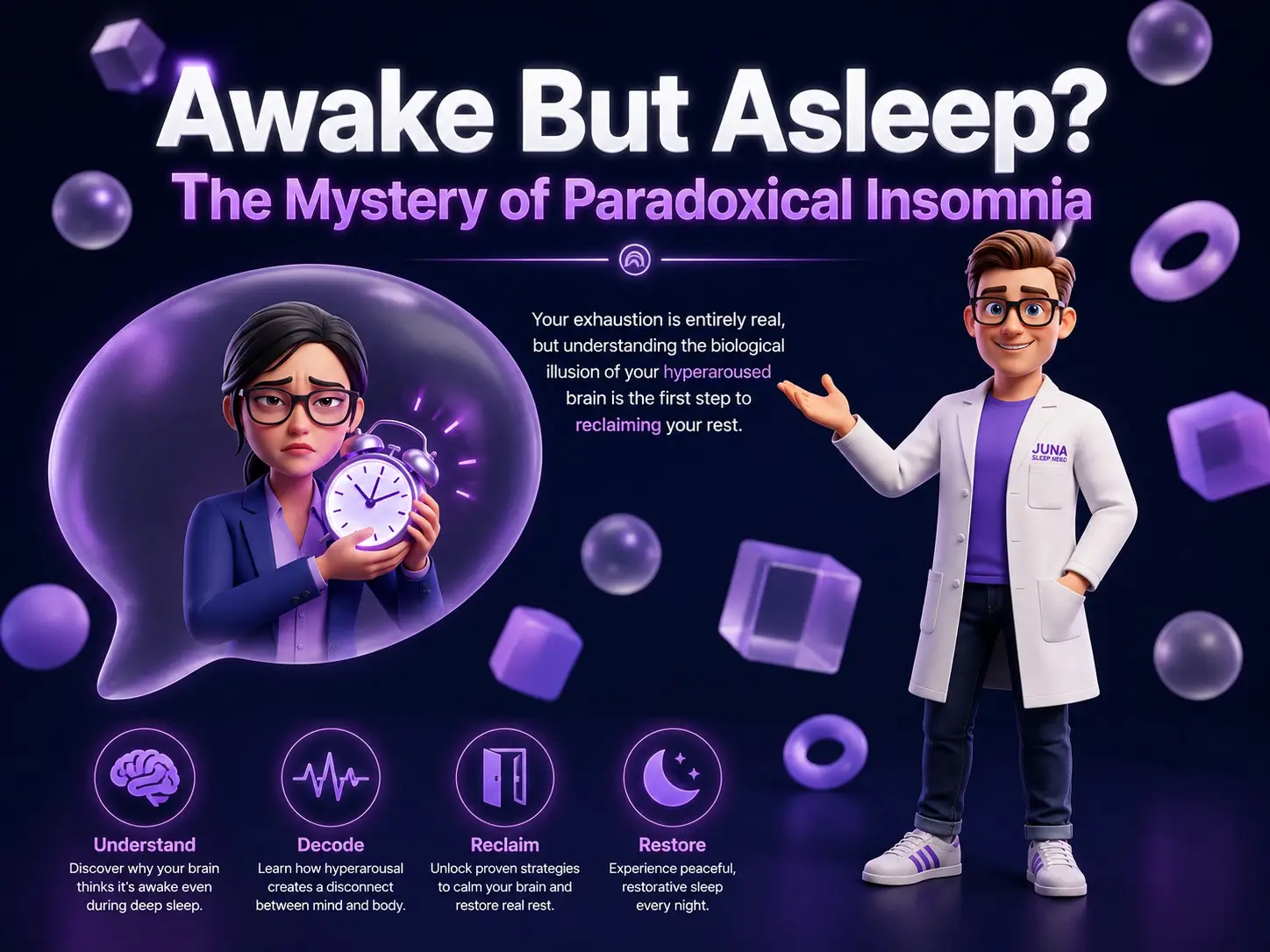
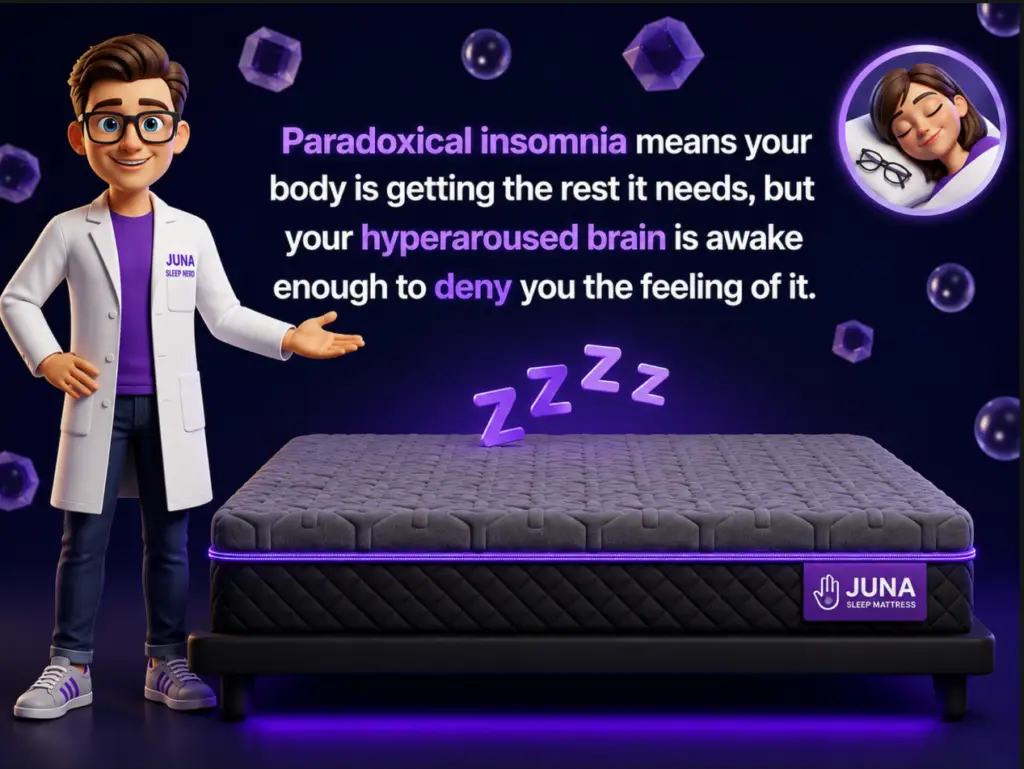
Paradoxical insomnia, or sleep state misperception, is a sleep disorder where individuals subjectively feel they are awake all night despite objective medical data showing they are fast asleep. This frustrating hyperarousal state skews perception, making hours of restorative deep sleep feel like conscious, exhausting wakefulness.
Discover ( Paradoxical insomnia)
Introduction: Sleep State Misperception
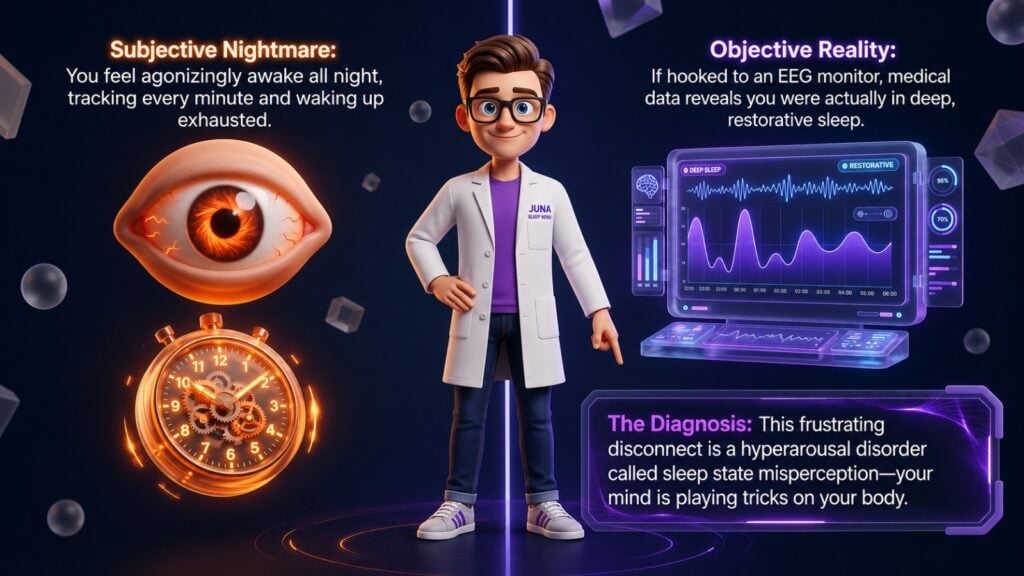
Imagine staring at your bedroom ceiling for what feels like eight agonizing hours. You hear every tick of the clock, track every shift of your partner’s weight, and wake up feeling entirely unrefreshed. Yet, if you were hooked up to an electroencephalogram (EEG) machine in a specialized medical facility, the data would reveal something completely unexpected: you were actually asleep for the vast majority of the night. This frustrating clinical phenomenon is known as paradoxical insomnia.
At Juna Sleep, we view sleep through the lens of rigorous biological science. As the Juna Sleep Nerd, I see many clients who feel trapped by their own sleep architecture. They suffer from a profound sense of mattress regret, believing their bedding is broken when, in reality, their brain’s internal monitoring system is misjudging their state of rest.
When your mind plays tricks on you, sleep should feel less risky. Whether you visit our showrooms from regional communities like Brandon, Harrisburg, or Tea, understanding this condition is key to taking back control of your nights. Your sleep schedule isn’t just a behavioral habit—and when your brain suffers from a hyperarousal sleep disorder, your physical environment must be meticulously engineered to help reset your sensory systems.
Discover ( Sleep State Misperception)
The Science of Paradoxical Insomnia
To understand paradoxical insomnia, we must first separate how we perceive sleep from how our biology experiences it. Historically referred to as sleep state misperception, this condition challenges classical medical assumptions. For decades, traditional physicians assumed that if a patient complained of sleeping only two hours a night, they must be suffering from objective sleep fragmentation. However, sleep medicine has shown that a subset of individuals can experience normal sleep cycles while remaining conscious.
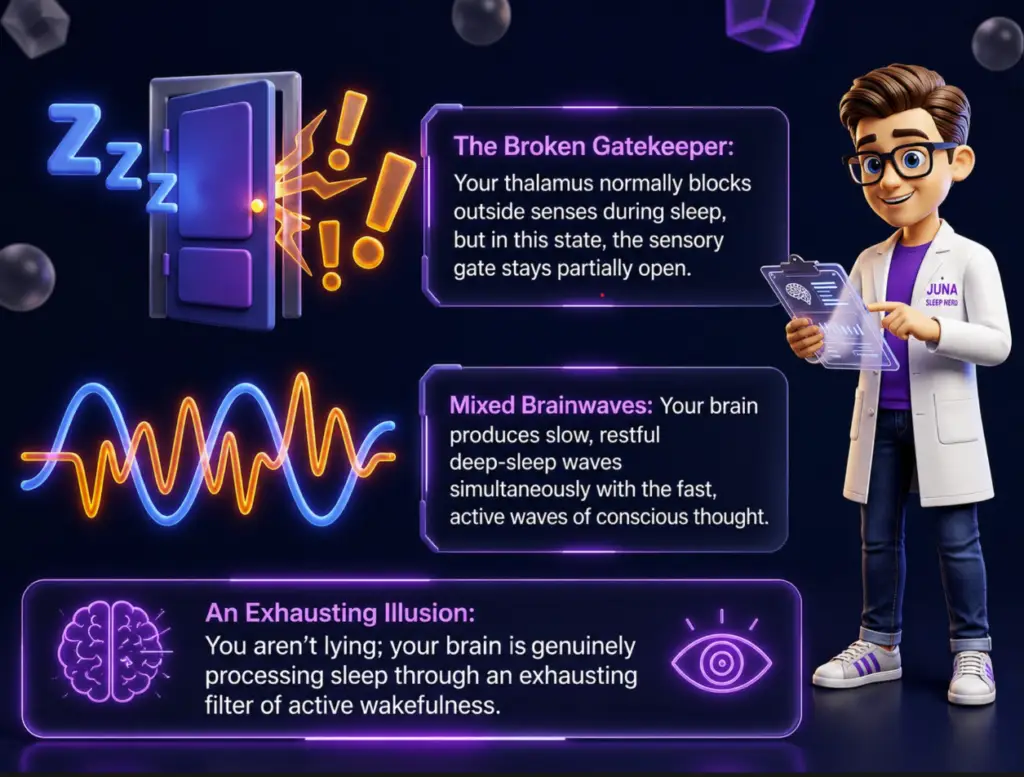
In a typical sleep architecture, a healthy individual transitions from light stages N1 and N2 to deep slow-wave N3 sleep, eventually entering rapid eye movement (REM) cycles. During these stages, the thalamus acts as a sensory gatekeeper, shutting off the outside world.
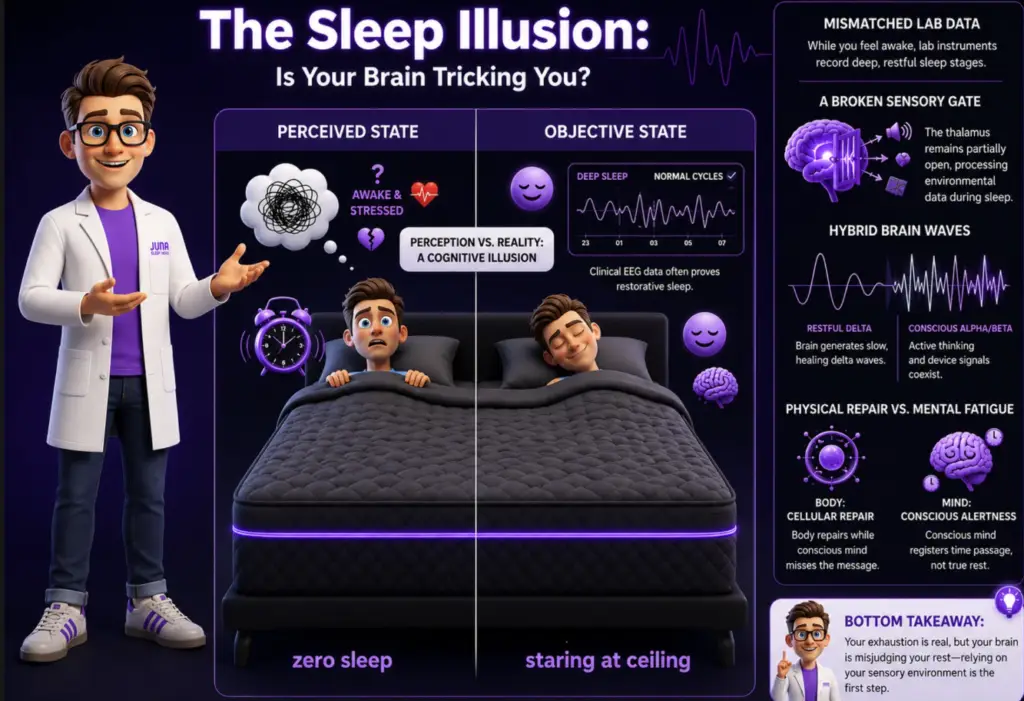
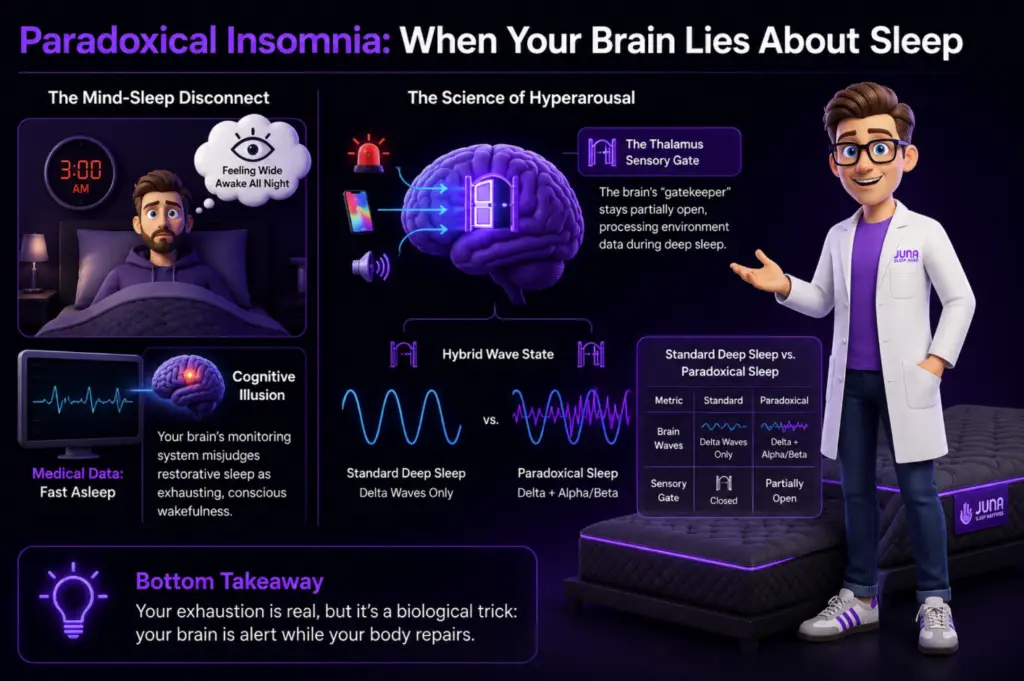
In patients experiencing paradoxical insomnia, this sensory gatekeeper remains partially open. The brain continues to process environmental data even as the cortex exhibits the slow-wave frequencies characteristic of deep, restorative sleep.
Expert Insight: “Patients with this condition aren’t exaggerating or lying. Their brains are genuinely processing sleep through a filter of active wakefulness, creating an exhausting cognitive illusion.” — The Juna Sleep Nerd.
Subjective vs. Objective Realities in the Sleep Lab
The true diagnosis of paradoxical insomnia is made only after a comprehensive polysomnography (PSG) study. This overnight test collects objective sleep lab data, tracking brain waves, eye movements, heart rates, and muscle tension. The results often reveal a massive discrepancy between subjective sleep quality and objective data.
A patient may fill out a morning questionnaire stating they slept for less than 45 minutes and woke up thirty times. Conversely, the computer printout shows a total sleep time of seven hours, a normal sleep efficiency score above 85%, and completely standard distributions of deep N3 and REM cycles. This mismatch is the defining characteristic of this complex hyperarousal sleep disorder.
The danger here is that a mattress should be built for real life, not just a quick showroom test. If you are sleeping on a surface that creates physical pressure points, your hyperaroused brain will seize upon those minor tactile signals. It uses them to confirm its bias that you are wide awake, making the subjective experience of insomnia significantly worse.
Discover ( Subjective vs. Objective Paradoxical Insomnia)
The Neurological Engines of Hyperarousal
Why does the brain misjudge its own sleep state? The answer lies within a neurological model called cortical hyperarousal. In a standard brain, waking up requires activation of the Reticular Activating System (RAS), which floods the cortex with excitatory neurotransmitters such as cortisol and norepinephrine. When it is time to rest, sleep-promoting regions like the ventrolateral preoptic nucleus (VLPO) suppress this system.
In people with paradoxical insomnia, both systems fire simultaneously. The brain generates the slow, rhythmic delta waves of deep sleep, but it mixes them with fast-frequency alpha and beta waves, which are typically associated with conscious, active thought. This hybrid state means that while your body is repairing cells and clearing metabolic waste, your conscious mind remains awake enough to register the passage of time.
Standard Deep Sleep: [Delta Waves Only] ——-> Sensory Gate Closed
Paradoxical Sleep: [Delta + Alpha/Beta] —-> Sensory Gate Partially Open
This state of chronic hyperarousal places a heavy physical load on the body. Because the mind believes it is awake, it prevents you from feeling the psychological benefits of a good night’s rest. You wake up with chronic mental fatigue, even though your muscles and tissues received the structural benefits of deep slow-wave sleep.
The Comparison: True Wakefulness vs. Paradoxical States
The following table highlights the differences between true objective wakefulness, traditional psychophysiological insomnia, and the unique state of sleep state misperception.
| Characteristic / Metric | True Objective Wakefulness | Traditional Insomnia | Paradoxical Insomnia |
| EEG Waveform Profile | Dominant Alpha and Beta | Fragmented Light Sleep Waves | Mixed Delta and Fast Alpha |
| Thalamic Sensory Gating | Fully Operational / Open | Intermittently Disrupted | Partially Open During Sleep |
| Objective Sleep Lab Data | 0 Minutes Slept | Clear Reductions in Sleep Time | Standard 7-8 Hour Sleep Volume |
| Subjective Sleep Quality | Accurate Perception of Waking | Feels Fragmented and Short | Feels Like 0-1 Hours of Sleep |
| Glymphatic Waste Clearance | Inactive | Highly Disrupted | Fully Operational in Deep Stages |
| Primary Systemic Stressor | Acute Sleep Deprivation | Physical & Mental Exhaustion | Cortical Hyperarousal & Anxiety |
| Response to Standard Sedatives | High Sedation Effect | Moderate Improvements | Blunted / Poor Perceived Relief |
How Your Mattress Environment Exacerbates Brain Misperception
When your brain is trapped in a hyperarousal sleep disorder, your physical environment becomes incredibly important. A mattress that sags, traps heat, or transfers motion from a partner acts as a constant source of sensory fuel for an overactive mind. Because your thalamus is failing to fully gatekeep outside stimuli, every minor physical discomfort is magnified and delivered directly to your conscious awareness.
If your bed creates a subtle “roll-off” feeling near the perimeter, or if you feel stuck in a deep body impression, your brain reads these physical signals as active problems that require attention. It uses these inputs to keep you anchored in a state of perceived wakefulness.
To break this cycle, you need a sleep system engineered to minimize sensory input and maximize physical comfort. This ensures that when your brain scans your body for discomfort, it finds absolutely nothing to report.
The Juna Advantage: Calming the Hyperaroused Brain
When your brain struggles with paradoxical insomnia, traditional mattress buying becomes a significant gamble. Many individuals purchase a mattress based on a quick, ten-minute showroom trial, only to discover weeks later that their subjective sleep quality has plummeted.
This happens because a hyperaroused brain interprets firmness and pressure in unpredictable ways. A mattress that feels soft in the afternoon can feel like concrete at 3:00 AM when your brain is stuck in a state of perceived wakefulness.
At Juna Sleep, we believe that better sleep should feel less risky. This philosophy is why we created the Lifetime Comfort Commitment. We do not force you to lock yourself into a single, permanent firmness level. If your hyperaroused brain begins to misinterpret your mattress surface, we do not expect you to just live with it.
Instead, our Juna Mattress Nerds can come directly to your home to physically open the zipper-accessible cover and rearrange or swap the internal high-density foam layers. By modifying the feel from plush to ultra-firm, or adding targeted lumbar support, we can systematically eliminate the minor physical distractions that feed your sleep state misperception.
specialist adjusting comfort layers to lower physical sensory feedback for hyperarousal management.
This dynamic level of service is highly valuable for residents navigating stressful lifestyles in the greater Des Moines metro area. If you are commuting to our showroom in surrounding areas like Des Moines, West Des Moines, or Ames, you can rest easy knowing that your sleep system can be continually refined as your neurological health adapts.
Zero Gravity and Motion Isolation: Advanced Sensory Reduction
Minimizing the total amount of sensory feedback entering the central nervous system is critical for quietening cortical hyperarousal. If your mattress fails to isolate movement or forces your muscles to stay tense to maintain alignment, your brain will remain highly alert.
The Kinetic Isolation of the H-Bed
For couples, this issue is amplified. If you suffer from paradoxical insomnia, every time your partner rolls over, your ungated thalamus processes that physical vibration. Your conscious mind uses that information to convince you that you have been awake all night.
This exact scenario is why we engineered the Juna H-Bed. Unlike traditional split-king mattresses that create an uncomfortable gap right in the middle of the bed, the H-Bed uses an innovative, single-canvas “H” structural geometry. It features independent vertical slices at the head and foot perimeters, held together by an uncut, 28-inch central foam bridge.
This design allows you to experience absolute kinetic isolation. Your partner can shift positions or wake up early without sending a single physical wave across the mattress surface, protecting your delicate sleep architecture from unwanted micro-arousals.
Lowering Systemic Stress via Zero-G Position
Pairing your mattress with an Adjustable Base provides another layer of sensory reduction. By shifting the bed into the NASA-inspired “Zero Gravity” position—which elevates your head and knees slightly above your heart—you can instantly reduce physical pressure on your spine and joints.
This weightless posture helps lower your heart rate, improves circulation, and reduces the physical symptoms of systemic anxiety. When your hyperaroused brain scans your body for discomfort in the middle of the night, the weightless layout of Zero-G leaves it with nothing to report, helping you transition more smoothly into deep, quiet rest.
Showroom Insights for Local Sleepers
You should never have to deal with the exhausting realities of a hyperarousal sleep disorder alone. Because Juna operates as a factory-direct manufacturer, we eliminate the traditional corporate middleman markups. This allows us to invest heavily in premium, commercial-grade materials like our 2.5 to 5 lb high-density foams, which hold their shape and support less than 4% firmness degradation over a 20-year lifespan.
If you want to experience how an engineered sleep system can help quiet an overactive mind, stop by one of our three local showrooms. Our Mattress Nerds are ready to help you analyze your sleeping habits in a relaxed, educational environment:
- Juna Sleep Systems – Sioux Falls, SD: Conveniently located for regional residents traveling from Brandon, Harrisburg, and Tea..
- Juna Sleep Systems – Rapid City, SD: Accessible via a short drive for western sleepers located in Box Elder, Summerset, and Sturgis.
Frequently Asked Questions (FAQ)
- What is the main cause of paradoxical insomnia? The exact underlying cause is rooted in cortical hyperarousal. During sleep, the brain simultaneously produces slow, restful delta waves alongside fast-frequency alpha and beta waves, which are typically seen during conscious thought. This dual firing keeps the brain’s sensory gates partially open, causing you to consciously register the passage of time even while your body is asleep.
- How do doctors confirm a case of paradoxical insomnia? A definitive diagnosis requires comparing subjective sleep journals with objective sleep lab data collected during a polysomnography (PSG) study. If the patient reports feeling wide awake all night, but the EEG, respiratory, and cardiac monitors show normal, healthy sleep cycles, the condition is classified as sleep state misperception.
- Does paradoxical insomnia cause the same physical damage as true sleep deprivation? No. Because objective lab data prove that patients are actually achieving deep slow-wave N3 and REM cycles, the body still executes essential physical maintenance, tissue repair, and hormone regulation. However, the condition causes intense psychological distress, chronic mental fatigue, and elevated daytime anxiety due to the perception of exhaustion.
- Can a bad mattress worsen a hyperarousal sleep disorder? Yes. When a person suffers from a hyperarousal sleep disorder, their brain’s sensory gatekeeper fails to fully block outside stimuli. A mattress that sags, creates hot spots, or transfers motion from a partner causes constant physical discomfort. The overactive mind seizes these signals to confirm its belief that it is awake.
- How does Juna’s Lifetime Comfort Commitment help manage sleep state misperception? Our Lifetime Comfort Commitment allows you to adjust the internal firmness, density, and alignment of your mattress at any time in the future. If your hyperaroused brain begins to misinterpret your mattress surface, a Juna Nerd can adjust the internal layers to eliminate the specific physical sensations that are feeding your insomnia.
- Why is motion isolation so important for people with paradoxical insomnia? Because the sensory gating system is compromised, any physical movement by a partner can easily penetrate your conscious awareness without fully waking your body. This reinforces the exhausting cognitive illusion that you are awake all night. The Juna H-Bed uses specialized structural geometry to absorb and isolate movement, keeping your sleep environment perfectly still.
- Can changing your sleeping position lower cortical hyperarousal? Yes. Using an adjustable base to rest in the Zero Gravity position unloads physical compression from the spinal column and lowers your resting heart rate. This physical reduction in stress signals your central nervous system that it is safe to rest, helping to calm an overactive mind.
Take Control of Your Rest Today
Your exhaustion is real, but your brain doesn’t have to keep misjudging how well you’re resting. Stop letting an overactive mind control your nights on an unstable, generic mattress. Whether you need the absolute motion isolation of our H-Bed or the long-term flexibility of our Lifetime Comfort Commitment, Juna builds custom sleep systems designed to calm your nervous system.
Visit your closest local Juna showroom today to talk with an expert Mattress Nerd, or explore our factory-direct sleep collections online to secure the peace of mind your body deserves!
