
The Quick Answer
What is the genetic cost of sleep deprivation? A summary of clinical research reveals that just one week of short sleep alters the expression of over 700 genes. This fundamentally rewrites your cellular biology, crippling the natural immune response, driving systemic inflammation, and dangerously accelerating factors associated with tumor growth.
Introduction
If you have ever worried about choosing the wrong mattress and waking up exhausted, you might assume the only penalty is a groggy morning and a reliance on extra coffee. However, the unseen, microscopic damage occurring within your body is far more alarming. Welcome back to the Juna Sleep Knowledge Base. As the Juna Sleep Nerd, I spend my time exploring the deep, biological intersection of restorative rest and human health. Today, we are looking at how a poor sleep environment physically alters your DNA.
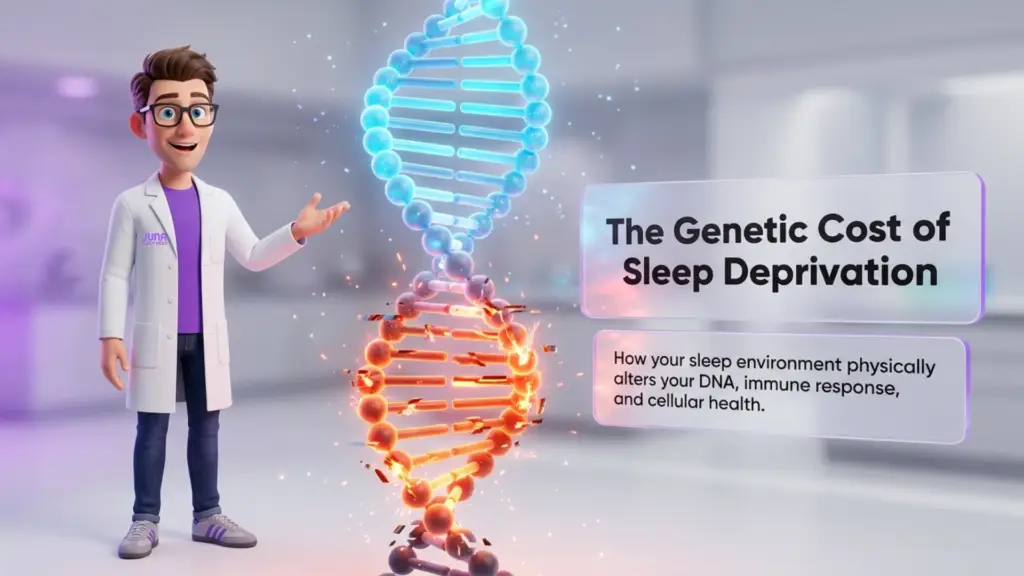
The genetic cost of sleep deprivation is a profound medical reality. When you consistently fail to get quality, uninterrupted rest, you are not merely building up a sleep debt. You are actively rewriting the biological instructions your cells follow to keep you alive. In this incredibly detailed guide, we will analyze exactly how short sleep alters gene expression, cripples your immune response, and accelerates tumor growth. We will also explore how investing in the right sleep environment can help halt this microscopic damage.
Table of Contents
Hijacking Your DNA: Understanding Gene Expression
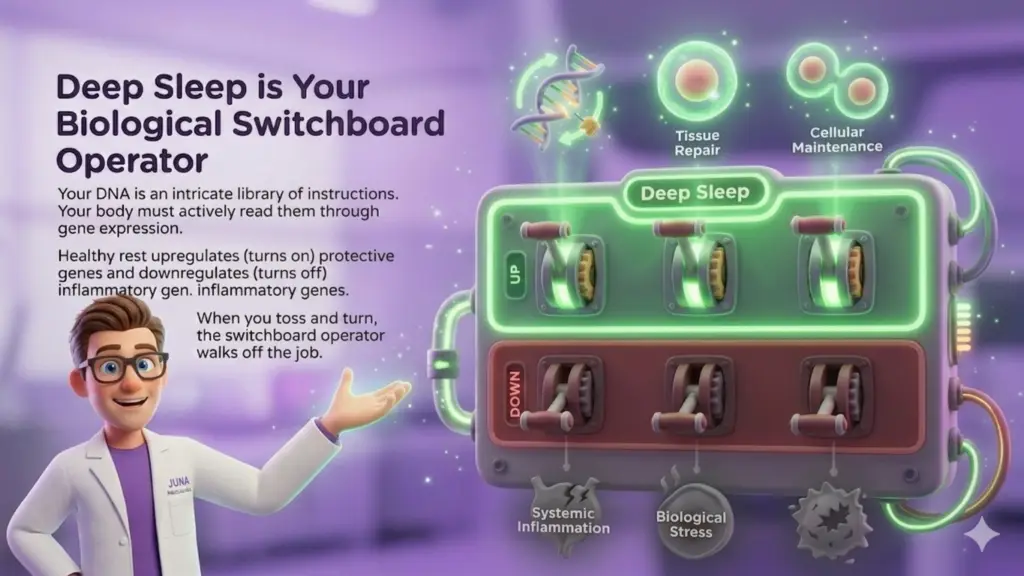
To fully comprehend the genetic cost of sleep deprivation, we must first look at how your DNA functions during the night. Your DNA acts as a vast, intricate library of biological instructions. However, simply having the instructions is not enough; your body must actively “read” them through a process known as gene expression.
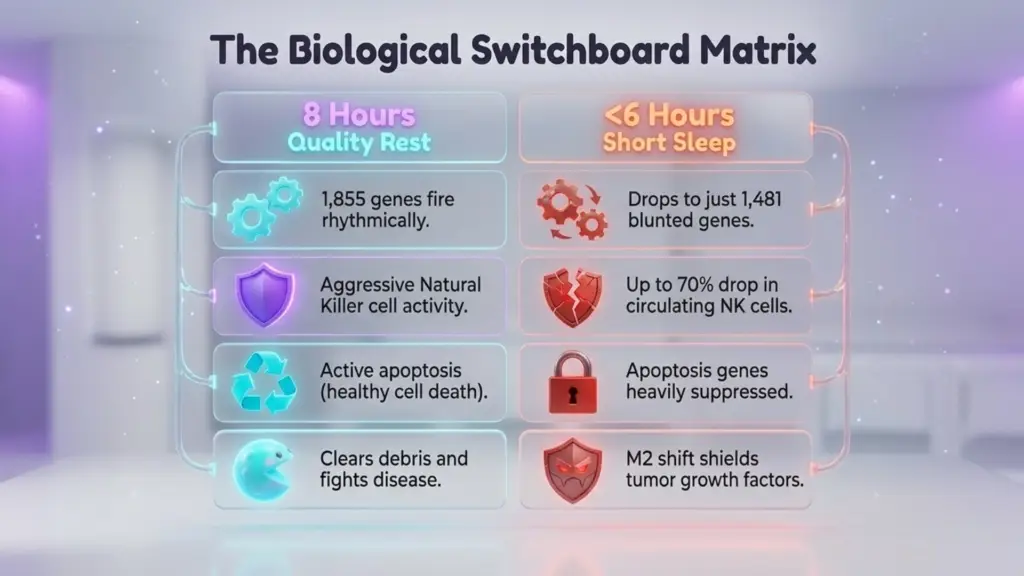
When you are healthy and well-rested, your body naturally upregulates (turns on) the genes responsible for tissue repair, cellular maintenance, and fighting off pathogens. Conversely, it downregulates (turns off) the genes associated with biological stress and systemic inflammation. Deep sleep acts as the master switchboard operator for this entire restorative process.
Expert insights from Juna’s Medical Advisors indicate that when you are tossing and turning, fighting with a partner for space, or sleeping on an unsupportive bed, this switchboard operator essentially walks off the job. The genetic cost of sleep deprivation occurs when the wrong genes are turned on, and the protective genes are forcibly shut off, leaving your body in a state of molecular chaos.
The 700-Gene Mutiny: One Week of Short Sleep
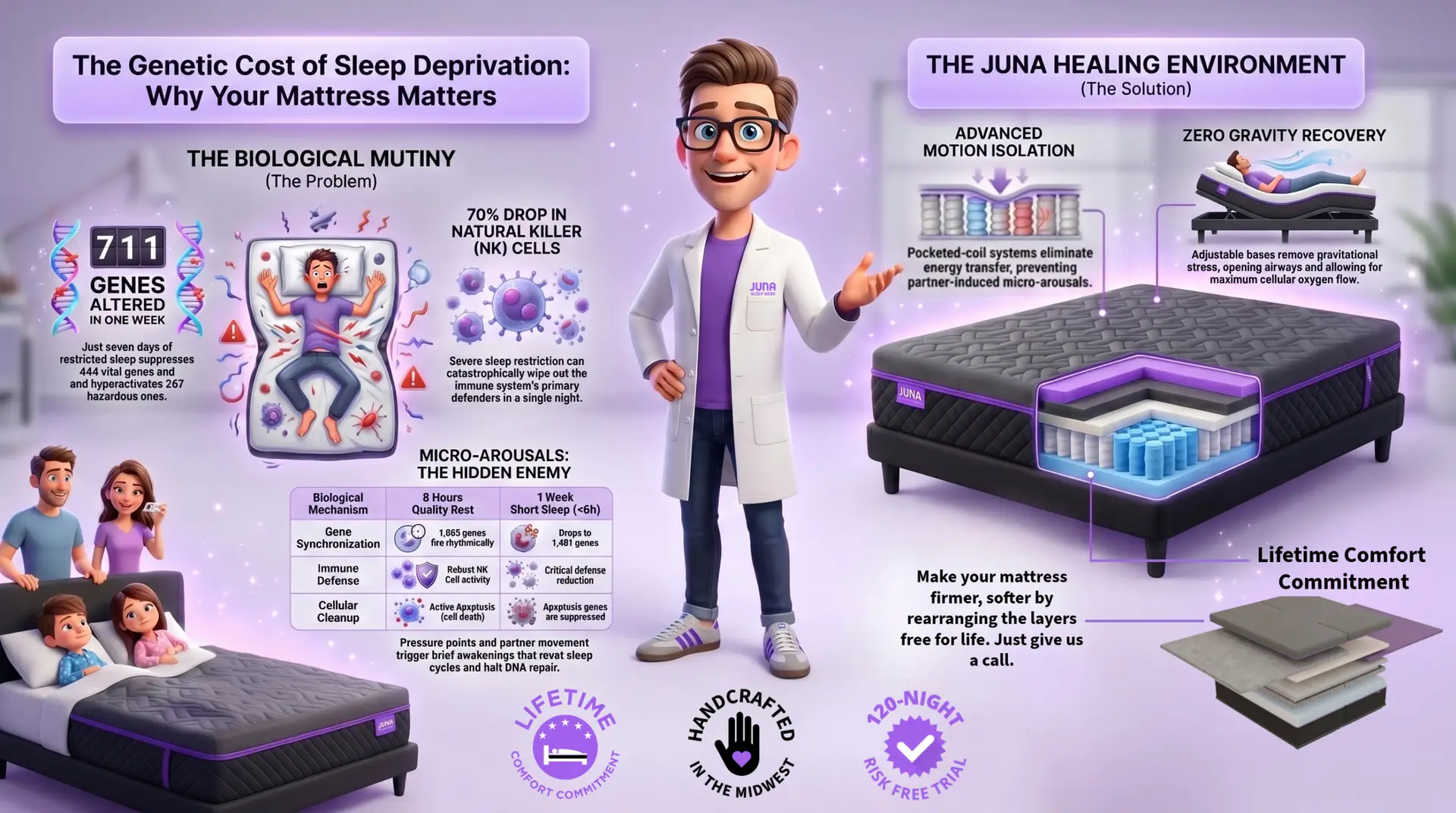
One of the most groundbreaking revelations in modern sleep science came from a clinical study examining exactly what happens after a single week of restricted rest. A summary of clinical research revealed a terrifying biological threshold: sleeping less than six hours a night for just seven days directly alters the expression of 711 genes.
This is the true, measurable genetic cost of sleep deprivation. The transcriptomic research showed that 444 vital genes were suppressed, while 267 hazardous genes were hyperactivated. The reality of 700 genes’ sleep deprivation is not just a statistic; it is a full-scale biological mutiny.
The genes that were suppressed were essential for healthy immune function, protein synthesis, and metabolic regulation. Meanwhile, the hyperactivated genes were directly linked to oxidative stress, chronic inflammation, and premature cellular aging.
Blood-Gene Expression Reveals Reduced Circadian Rhythmicity in Individuals Resistant to Sleep Deprivation
The Desynchronization of Circadian Rhythms
Many of the genes affected when sleep alters gene expression are intricately tied to your body’s circadian rhythm. Your physiology relies on “clock genes” to manage the strict 24-hour cycle of hormone release, digestion, and cellular repair.
Under healthy sleep conditions, roughly 1,855 genes rise and fall in perfect, synchronized harmony throughout the day. However, a major genetic cost of sleep deprivation is the blunt-force trauma to this biological synchronization. A week of short sleep reduced the number of rhythmically firing genes to just 1,481, severely blunting their amplitude.
This desynchronization means your liver, heart, and brain fundamentally lose their sense of internal time. The biological confusion at the cellular level is exactly why chronic sleep loss is heavily correlated with metabolic disorders and severe long-term health complications.
Crippling the Immune Response to Lack of Sleep
When discussing the genetic cost of sleep deprivation, its impact on your internal defense mechanisms is perhaps the most immediate danger. The immune response to lack of sleep is not just a matter of feeling run-down; it is a profound, documentable genetic failure.
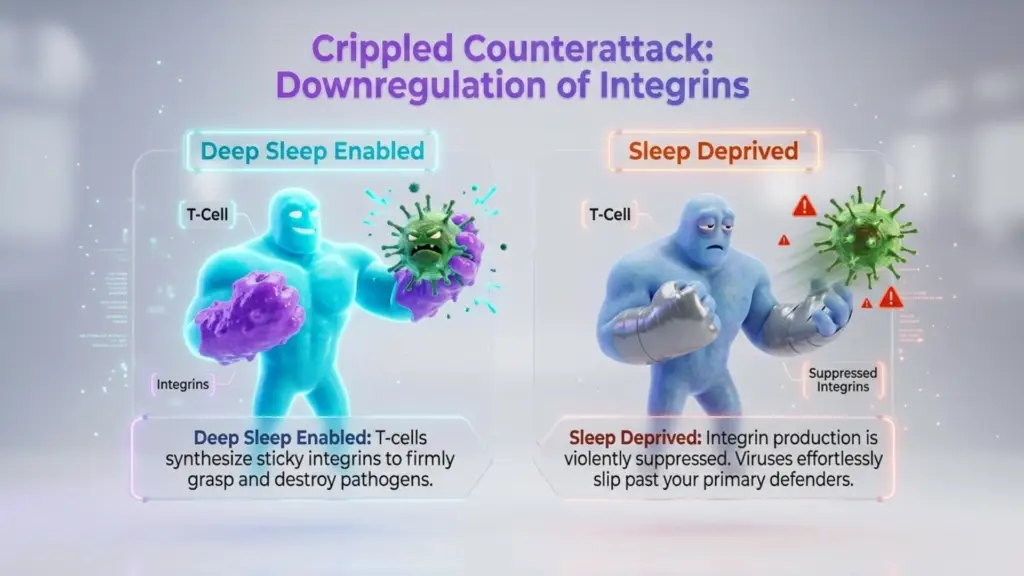
During slow-wave deep sleep, your immune system synthesizes crucial protective proteins called cytokines, which target infection and inflammation. Furthermore, T-cells—the white blood cells responsible for fighting intracellular pathogens—rely heavily on deep sleep to function correctly. A lack of sleep downregulates the genes responsible for producing integrins. Integrins are the sticky proteins T-cells use to attach to virus-infected cells.
If you are constantly waking up due to mattress pressure points, your body never enters the sleep stages necessary for cytokine production or T-cell activation. The genetic cost of sleep deprivation strips your body of its ability to mount an effective counterattack against microscopic invaders.
The Devastating Drop in Natural Killer Cells
Natural Killer (NK) cells are the aggressive special operations team of your immune system. They are actively responsible for identifying and destroying infected cells and mutated rogue cells before they can multiply. A summary of clinical research indicates that severe sleep restriction can eliminate up to 70% of circulating NK cells in a single night.
This catastrophic reduction is a direct result of the genetic cost of sleep deprivation. The genetic instructions required to deploy these vital defenders are suppressed. Your immune cells can literally bump into a pathogen but completely fail to destroy it, rendering your bodily defenses functionally useless.
Systemic Inflammation at the Cellular Level
Another devastating aspect of the genetic cost of sleep deprivation is the explosion of systemic, low-grade inflammation. While acute inflammation is a natural healing response to an injury, chronic inflammation is the fuel for almost every modern degenerative disease.
Because the genetic cost of sleep deprivation downregulates the body’s natural anti-inflammatory pathways, genes governing inflammatory responses are heavily upregulated. Your body interprets the sheer exhaustion as a life-threatening stressor, flooding your system with fight-or-flight chemicals like cortisol. This continuous inflammatory state damages healthy tissue over time and creates a toxic internal environment, proving that sleep alters gene expression in incredibly dangerous ways.
Accelerating Short Sleep Tumor Growth Factors
If weakening your immune defenses is not alarming enough, the genetic cost of sleep deprivation also involves accelerating the growth of dangerous cellular anomalies. A summary of clinical research demonstrates a strong, deeply concerning relationship between short sleep, tumor growth factors, and exhausted biology.
While sleep loss itself does not spontaneously generate disease, it creates the ideal biological ecosystem for rogue cells to multiply unchallenged. The genetic cost of sleep deprivation essentially removes the body’s biological safety nets.
The Rise of Pro-Tumoral Macrophages
In healthy individuals, immune cells called macrophages clean up cellular debris and fight infections. However, the severe sympathetic nervous system stress response triggered by sleep loss radically alters how these macrophages behave.
Clinical models suggest that the genetic cost of sleep deprivation forces an increase in immunosuppressive M2 macrophages. Instead of attacking abnormal cells, these altered macrophages actually shield and protect tumors from the few remaining immune cells trying to fight them. This genetic reprogramming is a horrifying example of how your own biology can be weaponized against you by poor sleep.
Suppressing Apoptosis (Programmed Cell Death)
A healthy, well-rested body uses deep sleep to trigger apoptosis—the programmed death of damaged or mutated cells. It is an essential, nightly biological cleaning process. The genetic cost of sleep deprivation forcefully suppresses the specific genes responsible for initiating apoptosis.
When damaged cells are not cleared away, and the immune system is simultaneously crippled by a lack of NK cells, cellular mutations can compound. The acceleration of short-sleep tumor growth factors is a direct consequence of this twofold genetic failure, underscoring why securing a supportive, undisturbed sleep environment is essential for long-term survival.
Comparison Table: Healthy DNA vs. Sleep-Deprived DNA
To fully grasp the severe, compounding nature of the genetic cost of sleep deprivation, we must compare the biological state of a well-rested body with that of an exhausted one.
| Biological Mechanism | 8 Hours of Quality Restorative Sleep | 1 Week of Short Sleep (<6 Hours) | The Genetic Impact |
| Gene Synchronization | 1,855 genes fire rhythmically | Drops to just 1,481 genes | Severe circadian rhythm desynchronization |
| Immune Defense | Robust Natural Killer cell activity | Up to 70% drop in circulating NK cells | Crippled immune response to pathogens |
| Inflammatory Response | Managed and properly regulated | Chronically upregulated and hyperactive | Toxic systemic cellular environment |
| Cellular Cleanup | Active apoptosis (healthy cell death) | Apoptosis genes are heavily suppressed | Accumulation of mutated, damaged cells |
| Macrophage Behavior | Clears debris and fights disease | Shift toward pro-tumoral M2 macrophages | Protection and fueling of tumor growth factors |

The Juna Advantage: Engineering a Healing Environment
Understanding the immense genetic cost of sleep deprivation raises an inevitable, practical question: why are we failing to get the deep sleep required for genetic maintenance? Often, it is not merely a lack of time in bed, but a severe lack of quality sleep due to environmental disruptions.
At Juna Sleep Systems, we believe that better sleep should feel less risky. Customers should not be stuck with a mattress that no longer fits their changing biological needs, slowly draining their genetic health. A mattress should be built for real life, not just a quick showroom test. When your cellular health and gene expression are on the line, long-term comfort matters just as much as first-impression comfort.
More of the purchase price should go into the materials, not the middlemen. That is the factory-direct advantage. We invest heavily in premium, high-density materials designed to support your body without causing the pressure points that interrupt deep, restorative sleep. Juna does not just sell a mattress and disappear; Juna supports the customer long after the sale.
Protecting Your DNA: The Role of Deep Sleep Architecture
Understanding the genetic cost of sleep deprivation requires us to examine the physical structure of our nightly rest. Sleep is not a flat line of unconsciousness; it is an active, highly structured biological journey. Throughout the night, your brain cycles through light sleep, REM (Rapid Eye Movement) sleep, and deep slow-wave sleep (NREM).
A summary of clinical research indicates that most genetic maintenance and cellular repair occur during the deepest stages of NREM sleep. During this time, your brain waves slow to a crawl, your blood pressure drops, and your body turns its attention inward. This is when the genes responsible for tissue repair are heavily upregulated.
If your sleep environment is inadequate, your body never enters these vital restorative cycles. Instead, you spend the entire night hovering in light sleep, leaving your cellular structure vulnerable and ultimately triggering the genetic cost of sleep deprivation.
Micro-Arousals: The Hidden Enemy of Gene Expression
You do not need to fully wake up to suffer the consequences of sleep deprivation from 700 genes. One of the most insidious threats to your biological health is micro-arousals. These are brief, almost imperceptible awakenings that last only a few seconds.
Micro-arousals are typically caused by environmental disruptions: a partner shifting their weight, a pet jumping on the bed, or, most commonly, pressure points building up on an unsupportive mattress. Every time your shoulder or hip begins to ache, your brain registers the discomfort and triggers a micro-arousal that prompts you to shift position.
Each of these microscopic interruptions resets your sleep cycle. You are forcefully yanked out of deep, slow-wave sleep back into light sleep. When this happens dozens of times a night, your body simply never has the uninterrupted time required to repair your DNA. This constant cycle of micro-awakenings is a primary driver of the genetic cost of sleep deprivation, effectively crippling your cellular recovery.
The Juna Solution: Halting the Genetic Cost of Sleep Deprivation
When you realize that your cellular health is literally on the line every time you go to bed, treating a mattress like a simple piece of furniture becomes impossible. Better sleep should feel less risky. You need a sleep system specifically engineered to prevent the micro-arousals that cause the genetic cost of sleep deprivation.
At Juna Sleep Systems, we focus on the science of restorative rest. We build mattresses using premium materials designed to cradle your body, eliminate pressure points, and provide the long-term support you need for deep, healing sleep.
Excellent Motion Isolation for Uninterrupted Rest
If you sleep with a partner, their nighttime movements could be the direct cause of your compromised immunity. When your partner tosses, turns, or gets out of bed, the resulting kinetic energy travels through standard, low-quality mattresses, triggering a micro-arousal in your brain.
This is why excellent motion isolation is critical. Juna mattresses are meticulously designed to limit motion transfer. Using advanced pocketed-coil systems and specialized foam-layer construction, we ensure that one sleeper can move with far less impact on the other side.
By helping isolate movement across the bed, a Juna mattress helps reduce partner disturbance. This means both you and your partner can enjoy the unbroken, slow-wave sleep required to synthesize vital proteins and mount a healthy immune response to lack of sleep.
Juna mattress provides excellent motion isolation to prevent the genetic cost of sleep deprivation.

Zero Gravity and Adjustable Base Benefits
To fully optimize your healing environment, pairing the Juna H-Bed with an adjustable base is a biological game-changer. When you elevate your head and legs slightly, you enter the Zero Gravity position. This posture creates a weightless, floating sensation that provides significant pressure relief for your lower back and joints.
By removing the gravitational stress from your muscles, your body can relax faster and sink deeper into restorative sleep. Furthermore, adjustable bases can help some sleepers breathe more comfortably. Utilizing Anti-Snore settings or slight head elevation can open up airways, allowing for maximum oxygen flow to your cells. When your breathing is unobstructed and your spine is perfectly supported, your body can efficiently fight off the genetic cost of sleep deprivation.
Juna Adjustable Bases: Explore how Zero Gravity positioning enhances deep sleep and physical recovery.
Serving Our Communities with Better Sleep
We are deeply committed to bringing this level of restorative sleep to our local communities. If you are near our Juna Sleep Systems – Sioux Falls, South Dakota, location, we proudly serve sleepers from Mitchell, SD; Yankton, SD; and Madison, SD.
And if you are out west, our Juna Sleep Systems – Rapid City, South Dakota location is ready to help customers from Lead, SD, Custer, SD, and Piedmont, SD escape the genetic cost of sleep deprivation.
IV. Schema FAQ Section
What is the genetic cost of sleep deprivation?
The genetic cost of sleep deprivation refers to the severe, negative biological changes that occur when short sleep alters the fundamental instructions your DNA sends to your cells. A summary of clinical research shows that poor sleep suppresses protective genes vital for immunity and hyperactivates hazardous genes associated with systemic inflammation.
How does a lack of sleep alter gene expression?
Sleep alters gene expression by breaking the biological switchboard. In a healthy state, deep sleep activates genes for tissue repair and suppresses inflammatory markers. A lack of restorative rest reverses this process, leaving your cellular biology in chaos and severely compromising your health.
Is 700 genes sleep deprivation a real medical statistic?
Yes. The reality of 700 genes of sleep deprivation comes from transcriptomic research. Studies have demonstrated that sleeping less than six hours a night for a single week negatively alters the expression of 711 vital genes, causing widespread disruption to your immune and metabolic systems.
How is the immune response to lack of sleep affected?
The immune response to lack of sleep is heavily compromised. The genetic cost of sleep deprivation suppresses the body’s ability to produce necessary immune proteins. Clinical summaries indicate that severe sleep restriction can wipe out up to 70% of circulating Natural Killer (NK) cells, drastically lowering your defenses.
Can poor sleep accelerate tumor growth?
Yes. A summary of clinical research shows a dangerous acceleration of short sleep tumor growth factors. Sleep exhaustion alters macrophage behavior, making them pro-tumoral, and suppresses apoptosis (programmed healthy cell death), allowing damaged or mutated cells to multiply much faster.
Will the Juna H-Bed help me get better deep sleep?
Absolutely. The Juna H-Bed offers independent adjustability without the traditional split-king gap. By providing personalized comfort and excellent motion isolation, it helps reduce partner disturbance, ensuring you both stay in the deep, restorative sleep stages necessary to avoid the genetic cost of sleep deprivation.
Why is the Juna Lifetime Comfort Commitment important for my health?
Because the genetic cost of sleep deprivation is often caused by micro-arousals from pressure points, your mattress must fit your body perfectly. The Lifetime Comfort Commitment allows Juna to adjust your mattress layers over time, ensuring you are never stuck with a bed that causes you pain or interrupts your deep sleep.
Stop Compromising Your Cellular Health
The science is clear, and the unseen damage is undeniable: the genetic cost of sleep deprivation is actively rewriting your biology, compromising your immune system, and accelerating dangerous health risks. You cannot afford to treat your nightly rest as an afterthought when it is the very foundation of your cellular recovery.
A mattress should be built for real life, not just a quick showroom test. With Juna’s Lifetime Comfort Commitment, premium factory-direct materials, and the innovative unified comfort of the H-Bed, we ensure your sleep environment actively supports your body’s natural healing processes.
Do not let a poorly designed, unsupportive bed hijack your DNA. Visit one of our showrooms in Sioux Falls or Rapid City, or explore our advanced sleep systems online to find the exact comfort profile your biology desperately needs to heal.
The Genetic Cost of Lost Sleep
