

Quick Answer: The Nightly Cerebral Rinse
The glymphatic system and deep sleep are closely connected processes that help the brain remove metabolic waste during the deepest stages of rest. This discovery has revolutionized modern neurobiology, sleep medicine, and long-term cognitive care. For decades, scientists wondered how the human brain, an organ consuming over 20% of the body’s metabolic energy, managed to clear out its daily structural waste without a traditional lymphatic network. During deep slow-wave sleep, the brain undergoes physical cellular changes that allow cerebrospinal fluid to flow through brain tissue and help remove waste proteins, such as amyloid-beta and tau, which are associated with neurodegenerative decline.
- The Waste Problem: While you are awake, everyday brain activity builds up toxic metabolic waste, including amyloid-beta (which forms plaques) and tau proteins (which cause cellular tangles).
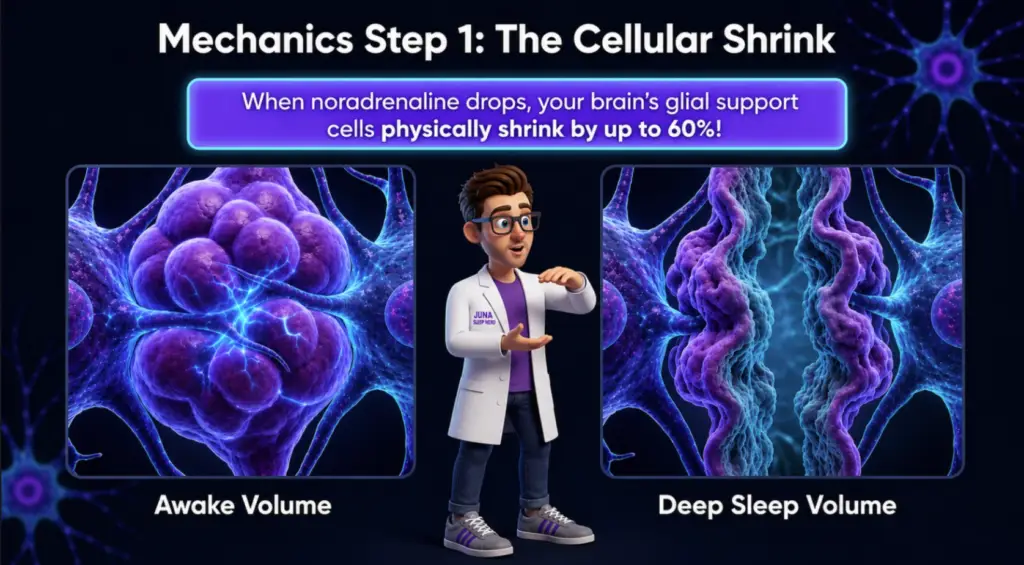
- The Cellular Shrinkage: As you transition into deep slow-wave sleep (Stage N3), your brain’s glial support cells physically shrink by up to 60%.
- The Pressure Wash: This shrinkage dramatically opens up the spaces between your brain cells. It allows a rush of cerebrospinal fluid (CSF) to surge through your brain tissue, sweeping away toxic waste and draining it safely into the body’s lymphatic system.
- The Critical Vulnerability: This waste-clearing cycle happens almost entirely during uninterrupted deep sleep. If you toss, turn, or experience frequent micro-arousals, this cleansing cycle is instantly cut short, allowing toxic proteins to accumulate over time.

Discover ( the Glymphatic System and Deep Sleep: The Brain’s Nightly Cleaning Process )
Introduction: The Mind’s Nightly Janitorial Crew
Every single minute your brain is awake, it operates at an incredibly high metabolic rate. Billions of neurons fire continuously, allowing you to process thoughts, move your muscles, and experience the world around you. But this intense mental activity creates a significant biological byproduct: metabolic waste. Just as a busy restaurant kitchen accumulates garbage throughout a dinner rush, a waking brain constantly fills up with cellular debris.
If a restaurant kitchen never cleaned up at the end of the night, it would quickly become unusable. The human brain faces the exact same danger. However, the brain cannot run a deep clean while you are awake. Running this intensive waste-clearance cycle requires so much coordination and fluid pressure that doing so during waking hours would severely disrupt your thoughts and sensory processing.
At Juna Sleep Systems, we design our premium mattresses with a deep appreciation for the complex processes of human biology. True physical and mental recovery requires a sleep surface that protects your body’s natural processes. Your brain relies on the steady, unbroken rhythm of Stage N3 slow-wave sleep to activate its internal cleaning cycle.
The glymphatic system and deep sleep work together during these restorative stages, creating the ideal environment for cerebrospinal fluid movement and helping the brain complete its nightly waste-clearance process.
Whether you are looking to protect your long-term cognitive health or visiting one of our regional factory showrooms in Sioux Falls, South Dakotaor Rapid City, South Dakota, understanding how the glymphatic system and deep sleep work together is the foundation of true restorative rest.
The Brain’s Unique Drainage Problem: Bypassing the Lymphatic System
Throughout the rest of your body, cellular waste removal is managed smoothly by the lymphatic system—a network of vessels that collects metabolic byproducts from your tissues and filters them back into the bloodstream. But the brain is completely cut off from this network. Because it is securely locked inside the skull and wrapped in the protective blood-brain barrier, the traditional lymphatic system cannot reach brain tissue.
For generations, this left a major gap in medical science: how does the most metabolically active organ in the body clean itself?
Neuroscientists finally solved the mystery by discovering a specialized network called the glymphatic system. The connection between the glymphatic system and deep sleep explains how the brain performs its nightly cleaning process. This system functions as a unique plumbing network, driven by the brain’s glial support cells (specifically astrocytes). It repurposes the cerebrospinal fluid (CSF) that surrounds the brain, turning it into a powerful internal cleaning rinse.

Discover ( the Glymphatic System: How the Brain Bypasses the Lymphatic System )
Mechanics of the Cleansing Cycle: How the Glymphatic System and Deep Sleep Activate Brain Cleaning
The way the glymphatic system and deep sleep work together is an extraordinary biological process. During deep slow-wave sleep, the glymphatic system activates through a series of mechanical changes inside the brain. When your brain waves slow down and transition into deep delta oscillations less than 4 Hertz during Stage N3 sleep, your brain stem triggers important neurotransmitter changes, including a significant reduction in noradrenaline levels.
This reduction in noradrenaline is one of the key reasons why the glymphatic system works more efficiently during deep sleep. The drop in this neurotransmitter signals your brain’s glial cells to physically change their structure. These support cells shrink by roughly 60%, instantly expanding the interstitial space—the fluid-filled channels between your neurons where cerebrospinal fluid can move more freely.
[Deep Slow-Wave Sleep (Stage N3)] ──► [Noradrenaline Drops]
[Glial Cells Shrink by 60%] ──► [Interstitial Space Expands]
[CSF Surges Through Brain Tissue] ──► [Amyloid-Beta & Tau Flushed Out]
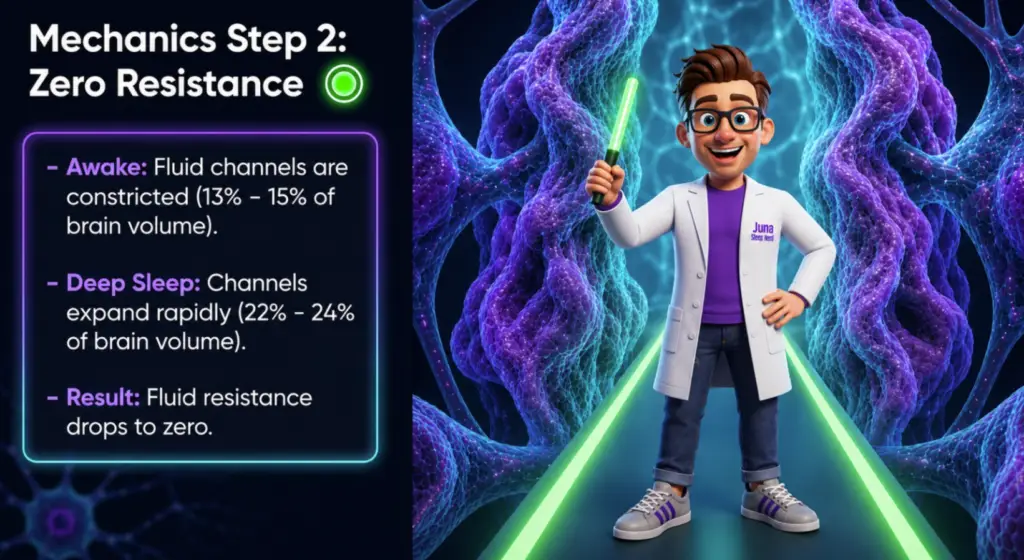
The expansion of these channels allows the glymphatic system to increase cerebrospinal fluid movement throughout brain tissue during deep sleep. By reducing fluid resistance, this process creates the ideal environment for brain waste clearance. At the same time, the rhythmic pulsing of brain arteries—supported by slow, deep sleep breathing—helps drive this internal cleaning process.
This coordinated activity explains why the connection between the glymphatic system and deep sleep is so important for cognitive health. Large waves of clear cerebrospinal fluid flow through brain tissue, sweeping past neurons and helping remove metabolic waste that accumulates during waking hours

Discover (How the Glymphatic System and Deep Sleep Powerfully Activate Brain Cleaning)
The Targets: How the Glymphatic System and Deep Sleep Remove Toxic Amyloid-Beta and Tau Proteins
The glymphatic system and deep sleep connection plays a critical role in removing two important metabolic waste products from the brain: amyloid-beta and tau proteins. During deep sleep, the glymphatic system activates to help transport these unwanted substances away from brain tissue and support healthy brain function.
Discover ( How the Glymphatic System and Deep Sleep Remove Toxic Amyloid-Beta and Tau Proteins)
Tau Proteins: Removing Cellular Waste During Deep Sleep
Tau proteins normally help maintain the internal structure and transportation systems of neurons. However, under metabolic stress, tau proteins can become damaged and lose their normal structure. This process can lead to the formation of neurofibrillary tangles inside brain cells.
The glymphatic system works during deep sleep to support the removal of these harmful waste products. By allowing cerebrospinal fluid to circulate through brain tissue, the brain’s natural cleaning system helps transport damaged proteins away from neurons.
The accumulation of amyloid plaques and tau tangles represents a major biological feature associated with Alzheimer’s disease and age-related cognitive decline. This is why researchers continue studying the relationship between the glymphatic system and deep sleep as an important factor in maintaining long-term brain health.
When the glymphatic system is functioning properly during deep sleep, cerebrospinal fluid carries these waste proteins toward larger drainage pathways, where they can eventually leave the brain and be processed by the body’s natural waste-removal systems.
A consistent pattern of high-quality deep sleep allows the glymphatic system and deep sleep process to perform this essential nightly maintenance, helping protect the brain from excessive metabolic waste accumulation.
Amyloid-Beta: The Waste Protein Linked to Brain Aging
Amyloid-beta is a natural byproduct of regular neuronal communication. During waking hours, this protein accumulates in the fluid spaces surrounding brain cells. However, the glymphatic system during deep sleep helps clear amyloid-beta from the brain by using cerebrospinal fluid (CSF) to move waste through specialized drainage pathways.
When the glymphatic system and deep sleep cycle are disrupted, amyloid-beta proteins may remain in the brain longer than normal. Over time, these proteins can fold incorrectly and combine together, creating sticky structures known as amyloid plaques. These plaques can interfere with communication between neurons and contribute to inflammation within brain tissue.

The Chronological Timeline: Why Deep Slow-Wave Sleep is Vital for the Glymphatic System and Deep Sleep Cycle
The glymphatic system and deep sleep connection depends on a very specific neurological environment to function correctly. The glymphatic system during deep sleep becomes highly active during slow-wave sleep, when the brain creates the ideal conditions for cerebrospinal fluid movement and metabolic waste removal.
Unlike light Stage 1 or Stage 2 sleep, deep slow-wave sleep provides the necessary biological conditions for the glymphatic system to clean the brain effectively. During REM sleep, this cleaning activity decreases significantly, making Stage N3 deep sleep one of the most important periods for brain waste clearance.
Slow-wave sleep dominates the first half of the night, occurring in long, uninterrupted blocks during the first three to four sleep cycles. These extended deep sleep periods allow the glymphatic system and deep sleep process to maintain continuous fluid circulation throughout brain tissue.
During these deep sleep windows, your body’s cardiorespiratory rhythms slow down and stabilize. This steady heart rate, controlled breathing, and reduced brain activity create the perfect environment for the glymphatic system during deep sleep to move cerebrospinal fluid through expanded brain channels.
This fluid movement is essential because the glymphatic system works during deep sleep to remove metabolic waste proteins, including amyloid-beta and tau, that accumulate during waking hours.
If deep sleep is shortened, fragmented, or repeatedly interrupted, the glymphatic system and deep sleep cycle cannot complete its nightly cleaning process. As a result, waste products may remain in brain tissue longer, reducing the efficiency of natural brain maintenance.
Systemic Cleansing Matrix: Wakefulness vs. Deep Slow-Wave Sleep
The following matrix compares how the brain’s internal environment changes between active waking hours and deep restorative sleep, highlighting why the glymphatic system and deep sleep relationship is essential for maintaining healthy brain function.
| Brain System Dimension | Daytime Active Wakefulness | Deep Slow-Wave Sleep (Stage N3) |
| Dominant Brain Wave Rhythm | Fast, irregular Beta & Gamma waves | Slow, highly synchronized Delta waves ($<4text{ Hz}$) |
| Glial Cell Physical State | Fully expanded (Swollen volume) | Maximally shrunken (60% volume reduction) |
| Interstitial Channel Volume | Constricted and narrow ($13%$ to $15%$ of brain volume) | Greatly expanded ($22%$ to $24%$ of brain volume) |
| Fluid Flow Resistance | High resistance (Restricted flow) | Low resistance (Free fluid surge) |
| Primary Fluid Vector | Localized cerebrospinal fluid recycling | Convective, high-pressure tissue rinse |
| Waste Clearance Efficiency | Minimal (Accumulation phase) | Maximum (Complete clearance phase) |
| Primary Toxins Targeted | None (Active generation) | High-volume removal of Amyloid-Beta & Tau |
The Threat of Fragmentation: How Micro-Arousals Disrupt the Glymphatic System and Deep Sleep Cycle
Because the glymphatic system and deep sleep process depend on a delicate balance of fluid pressure, brain chemistry, and cellular changes, it is extremely vulnerable to disruptions in sleep architecture. The glymphatic system during deep sleep requires long, uninterrupted periods of slow-wave sleep to properly remove metabolic waste from brain tissue.
One of the biggest challenges for this brain-cleaning process is the micro-arousal—a brief, subconscious shift from deep sleep toward wakefulness that may last only a few seconds. These small interruptions can interfere with the natural rhythm required for the glymphatic system to function during deep sleep.
Although these brief awakenings are often too short to remember the next morning, they can trigger a sudden increase in noradrenaline. This chemical change signals the brain to return toward a more active state, causing previously expanded fluid pathways to become restricted again.
When these cellular channels narrow, cerebrospinal fluid movement slows down, reducing the efficiency of the glymphatic system and deep sleep cleaning cycle. The brain loses the ideal conditions needed for continuous waste removal and protein clearance.
Even if the brain returns to deep sleep several minutes later, the glymphatic system during deep sleep must gradually rebuild the correct environment for fluid circulation. Frequent disruptions throughout the night repeatedly interrupt this process, preventing the brain from completing its natural nightly cleaning routine.
Protecting uninterrupted deep sleep is therefore essential because the relationship between the glymphatic system and deep sleep depends not only on sleep duration but also on maintaining consistent, high-quality slow-wave sleep.

Physical Sabotage: How Mattress Degradation Blocks Brain Cleaning
Many people fail to realize that an uncomfortable, degraded mattress directly causes long-term cognitive fog and sleep fragmentation. When you sleep on a typical mass-market mattress built with low-density 1.2 lb to 1.8 lb foams, the core materials break down rapidly under your body’s heaviest zones—specifically your hips and lower back.
As the mattress develops a sag crater, it drops your spine out of its natural orthotic alignment. To protect your spinal cord from hyperextension, your deep back and core muscles are forced to stay tense throughout the night.
This ongoing muscle tension restricts blood flow, pinches peripheral nerves, and creates uncomfortable pressure points on your shoulders and joints.
Your nervous system responds to these physical pain signals by sending constant distress alarms up your spinal cord and into your brain stem. Your brain stem reacts by triggering a micro-arousal, forcing your body to toss and turn to relieve the physical strain. By repeatedly breaking your deep sleep cycles, a sagging mattress directly disrupts your glymphatic system, sabotaging your brain’s ability to cleanse itself.
The Juna Strategy: Engineering an Environment for Unbroken Rest
At Juna Sleep Systems, we design our premium mattresses to eliminate the physical and environmental stressors that disrupt your sleep architecture. We understand that a high-quality mattress is a vital tool for your long-term cognitive health. Our sleep systems are carefully handcrafted using premium materials to keep your body perfectly still and your nervous system completely relaxed, allowing your brain to get the deep, uninterrupted slow-wave sleep it needs for complete glymphatic cleansing.
Dissipating Metabolic Heat Spikes via Open-Cell Ventilation
To keep your body resting comfortably in deep sleep, your core temperature must drop to its lowest baseline of the day. Traditional closed-cell memory foam mattresses trap your radiating body heat, turning the bed into a hot surface that triggers night sweats and heat-induced micro-arousals.
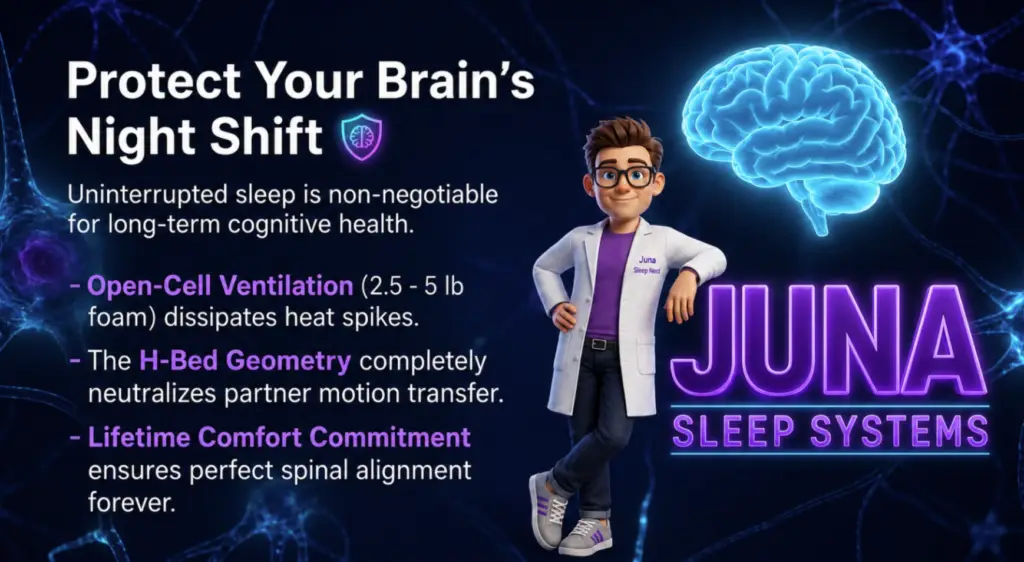
Juna eliminates this issue by using premium, heavy-duty open-cell foams ranging from 2.5 lb to 5 lb in density. Our advanced open-cell foam structure acts as a highly breathable, self-ventilating cooling system.
With every natural movement, the mattress layers act like a microscopic bellows, pumping hot, humid air out and drawing fresh, cool air in through the mattress core. This constant airflow keeps your skin temperature perfectly regulated, keeping your brain securely anchored in deep, unbroken slow-wave sleep.
Neutralizing Motion Transfer via the Juna H-Bed Geometry
For co-sleepers, partner movement is a leading cause of fragmented sleep. On a standard inner-spring mattress, a partner shifting or rolling over sends a physical shockwave across the entire bed, jarring your nervous system and instantly breaking your deep sleep cycles.
The Juna H-Bed completely eliminates this issue through an innovative, proprietary layout. Built as a single, unified King-sized mattress, the H-Bed features deep vertical cuts at the head and foot of the bed, connected by a solid, uncut 28-inch foam bridge right in the middle.
This creates a highly effective kinetic barrier. When your partner tosses, turns, or gets up, the physical motion is entirely absorbed and dissipated on their side of the mattress. Your side remains perfectly still and silent, protecting your fragile deep sleep cycles from external disruption.
Restoring Proper Alignment via the Lifetime Comfort Commitment
Your body’s support needs naturally change over time due to athletic training, weight shifts, injury recovery, or aging. A mattress that feels ideal today might begin to create localized pressure points a few years down the road. If your mattress cannot adapt to these changes, it will eventually cause the muscle strain and soreness that breaks your sleep.
Juna solves this problem forever with our exclusive Lifetime Comfort Commitment. We don’t force you to settle for a single firmness level for the life of your mattress.
If your body ever requires an adjustment in support, simply call us up. Our expert Juna Mattress Nerds will come directly to your home, unzip your mattress cover, and physically swap out or rearrange the internal high-density foam comfort layers on-site. This personalized service ensures your body always enjoys perfect alignment, supporting clear, focused brain health for decades to come.
Postural Elevation for Optimal Glymphatic Drainage
To support smooth fluid pressure and maximize your brain’s nightly cleaning cycle, relaxing your neuromuscular system before you close your eyes is incredibly helpful. Pairing a high-density Juna mattress with our Advanced Adjustable Base provides the ultimate way to wind down your body. By using our scientifically designed “Zero Gravity” setting, your body rests in a weightless, neutral posture that removes all strain from your joints and skeleton.
- Optimizing Cardiovascular Flow: Elevating your legs slightly above heart level improves blood return, helping lower a racing pulse and shifting your body into a calm state.
- Decompressing Spinal Strain: Elevating your head and knees removes mechanical compression from your lower back, instantly relaxing your muscles and stopping physical pain signals.
- Opening Respiratory Passages: A subtle head elevation keeps your airways completely open, preventing snoring and oxygen drops that can wake you from deep sleep.
The Factory-Direct Paradigm: Honest Pricing for Better Brain Health
How is Juna able to use these premium, commercial-grade open-cell foams while keeping our pricing honest and accessible? It all comes down to our factory-direct business model. The traditional mattress industry relies on a bloated supply chain packed with middlemen, distributors, national brokers, and third-party retail storefronts—with each layer adding heavy markups to the final price tag. To protect their margins, mainstream brands are forced to cut corners on the quality of their interior foams.
At Juna, we cut out the middlemen completely. We build our mattresses locally and sell them directly to you through our own regional showrooms. This allows us to route our investments away from corporate retail markups and straight into world-class components, including our specialized Infinity Edge support system.
By surrounding our high-resiliency support core with an ultra-firm perimeter rail and a butterfly quad coil unit, we deliver consistent support all the way to the very edge of the bed. You get a reliable, highly breathable sleep surface that protects your physical alignment and supports deep brain recovery, backed by the absolute best value in the industry.
Conclusion: Pressure-Wash Your Mind Every Night
Your memory, focus, and long-term cognitive health depend heavily on your brain’s ability to run its nightly glymphatic cleaning cycle. How deep sleep cleanses the brain is a powerful reminder that mental clarity is directly tied to the quality of your physical recovery environment.
By choosing a custom-tailored Juna Sleep System, you remove the mattress sag, motion transfer, and trapped heat that cause sleep fragmentation. Stop letting a bad bed compromise your cognitive health—visit a Juna showroom today and give your brain the clean, restorative sanctuary it truly deserves.
Frequently Asked Questions (FAQ)
1. What exactly is the glymphatic system, and when does it activate?
The glymphatic system is the brain’s specialized waste-clearance network. It activates almost exclusively during Stage N3 deep slow-wave sleep, using cerebrospinal fluid (CSF) to pressure-wash away metabolic waste products that accumulate during your waking hours.
2. How do brain cells physically change during deep sleep to allow for cleaning?
During deep slow-wave sleep, a drop in noradrenaline causes the brain’s glial support cells to physically shrink by up to 60%. This shrinkage expands the fluid channels between neurons, drastically lowering resistance and allowing cerebrospinal fluid to rush through and cleanse the tissue.
3. What toxic proteins does the glymphatic system flush out of the brain?
The system specifically targets and removes amyloid-beta and tau proteins. If these metabolic waste products are allowed to accumulate due to poor sleep, they form sticky plaques and tangles that are linked to Alzheimer’s disease and cognitive decline.
4. How does a sagging mattress directly disrupt my brain’s cleaning cycle?
A sagging mattress drops your spine out of alignment, forcing your muscles to stay tense to protect your body. This physical strain sends constant pain signals to your brain stem, triggering frequent, hidden micro-arousals. These brief awakenings spike noradrenaline, causing brain cells to swell and instantly stopping the glymphatic fluid flow mid-stream.
5. Why is Juna’s non-prorated warranty better than standard mattress warranties?
Juna offers a complete 12-year or 18-year non-prorated warranty, meaning your protective coverage value never degrades or depreciates based on how long you’ve owned the bed. Traditional brands often use prorated warranties that force you to pay high out-of-pocket fees for repairs or replacements as the mattress ages.
6. Can Juna adjust the firmness of my mattress if my comfort needs change?
Yes! Through our exclusive Lifetime Comfort Commitment, our expert Juna Mattress Nerds will come directly to your home to unzip your mattress cover and adjust or swap out the internal high-density foam layers on-site. This ensures your body continues to receive perfect orthotic support as your needs change over the years.
7. How does the Juna H-Bed protect my deep sleep from a restless partner?
The Juna H-Bed features a unique “H” structural geometry with deep vertical expansion cuts at the head and foot of the mattress, separated by a solid 28-inch central foam bridge. This design provides absolute kinetic isolation, meaning your partner can shift or toss throughout the night without transferring any physical movement across to your side of the bed.
Visit a Juna Showroom Near You
Are you ready to optimize your cognitive recovery and build a sleep environment that protects your long-term brain health? Visit one of our three regional factory-direct showrooms today to speak face-to-face with a Juna Sleep Nerd and test a mattress built for your life.
- Juna Sleep Systems – Sioux Falls, SD: Conveniently located for families driving in from Brandon, Harrisburg, or Tea..
- Juna Sleep Systems – Rapid City, SD: Easily accessible for West River communities, including Box Elder, Summerset, and Sturgis.
