
Estimated reading time: 12 minutes
Key Takeaways
- The Goldilocks principle applies: Soft mattresses (3-4) cradle side sleepers; medium (5-6) suits most people; firm (7-8) supports back/stomach sleepers
- Your body calls the shots: Weight drastically changes how firm a mattress feels, a 250 lb stomach sleeper needs a completely different bed than a 110 lb side sleeper
- One size rarely fits all: Over 60% of couples disagree on ideal firmness (hence the rise of split-king beds)
- You can avoid commitment issues: Juna’s modular system lets you change firmness post-purchase—no breakup fees
Juna Classics Mattresses: Soft to Firm Options Starting at $588
Let’s be honest, choosing a mattress is weirdly stressful. You’re supposed to pick your ideal comfort level based on a five-minute lie-down in a fluorescent-lit store, then hope it works for the next eight years? That’s like choosing a life partner based on a handshake.
The truth about mattress firmness? It’s deeply personal. What feels like cloud-like perfection to your yoga instructor might leave you with back pain, while your partner’s “supportive” firm mattress could have you waking up with numb shoulders.
Here’s what actually matters when choosing between soft, medium, and firm:
Why Your Current Mattress Might Be Gaslighting You
Ever noticed how hotel beds feel amazing? There’s science behind that. Most hotels use medium-firm mattresses that hit the sweet spot for average-weight back sleepers, which explains why they’re universally comfortable enough for guests, but might not be perfect for your everyday needs.
Mattress firmness isn’t about quality. That ultra-luxury $5,000 bed isn’t “better” than a $1,000 one, it just has a different firmness profile that may or may not work for your body.
Here’s what nobody tells you in mattress stores:
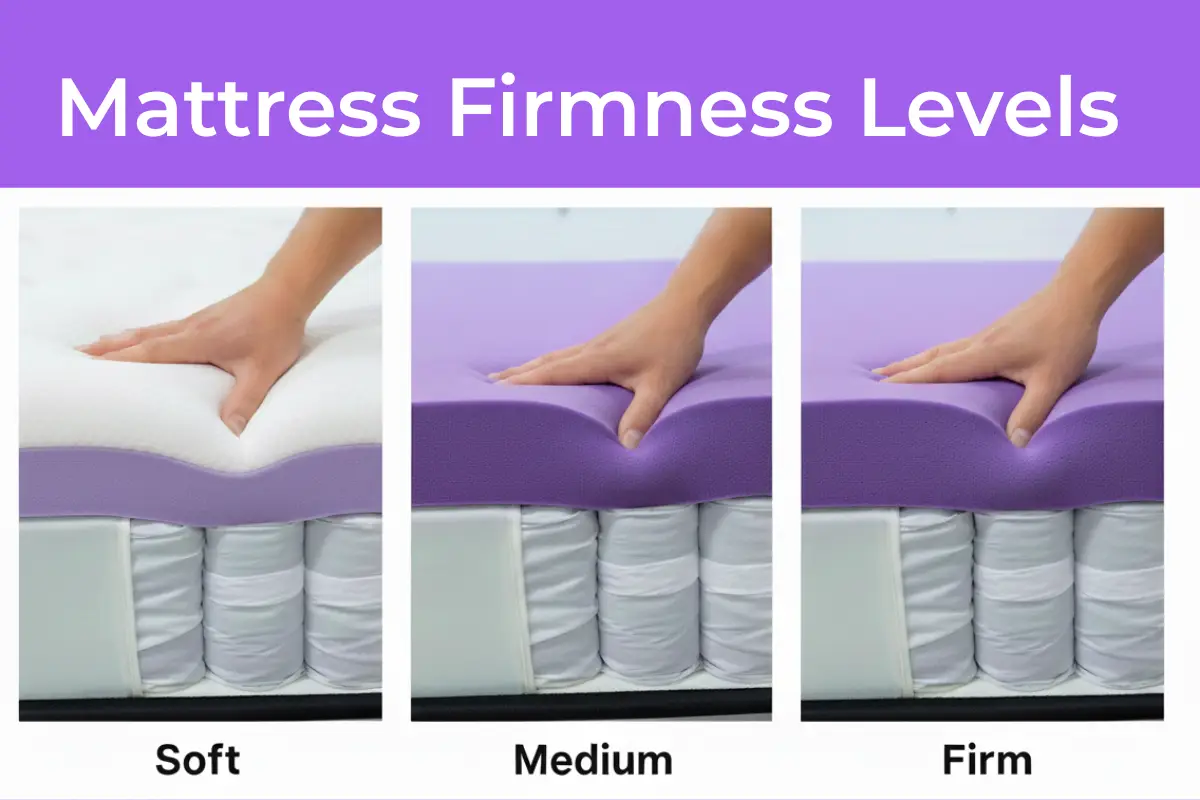
Soft (3-4)
- Feels like: Sinking into fresh pizza dough
- Best for: Side sleepers under 130 lbs who want their shoulders to disappear into the bed
- Reality check: Heavier people will sink straight through to the support layer
Medium (5-6)
- Feels like: A supportive hug from a memory foam grizzly bear
- Best for: Back sleepers, combo sleepers, and couples who can’t agree
- Reality check: The “safest” choice that’s rarely perfect but usually not terrible
Firm (7-8)
- Feels like: Napping on a very polite wooden plank
- Best for: Stomach sleepers and anyone over 230 lbs who needs to stay on top of the bed
- Reality check: Lightweight sleepers will feel like they’re sleeping on a cafeteria table
Pro tip: Those “luxury firm” and “ultra plush” labels are meaningless. One brand’s “medium” is another brand’s “firm.” Always check the actual 1-10 rating.
The Sneaky Way Your Body Betrays You
Here’s where things get personal. Your sleep position is just the opening act, your weight dramatically alters how any mattress feels:
Under 130 lbs:
- Beds feel firmer to you
- Likely need to go softer than “recommended”
- Warning: Most mattress showrooms use 170 lb testers
130-230 lbs:
- What you feel matches the label
- Can follow standard recommendations
- Still exceptions for shoulder/hip pain
Over 230 lbs:
- Beds feel softer to you
- Need firmer options with dense support layers
- Memory foam may sleep excessively hot
Fun(?) fact: Gaining/losing 20+ lbs means your perfect mattress might not work anymore. Just another reason adjustable systems are genius.
The Pillow Test That Reveals Your Ideal Firmness
Before you shop, try this at home:
- Lie on your usual sleep position on the floor with a thin pillow under your hips (back sleepers) or between your knees (side sleepers)
- Have someone photograph your spine alignment from the side
Signs you need adjust:
- Hips sagging? → Too soft
- Shoulders numb? → Too firm
- Backache after 10 mins? → Wrong support
This free test reveals more than 20 minutes in a mattress store.
Why Juna’s System Is Like Legos for Adults
Imagine buying shoes where you could adjust the arch support after wearing them. That’s Juna’s approach:
- Start with their recommended configuration
- Sleep on it for two weeks
- Unzip and rearrange layers if needed
Real-world perks:
- Post-surgery adjustment: Firm after back surgery → gradually add softness
- Pregnancy comfort: Modify as belly grows
- Partner peacekeeping: His side firm, hers plush
The kicker? It’s actually cheaper than replacing entire mattresses every time your needs change.
The Uncomfortable Truth
You’ll spend 1/3 of your life on this decision. But here’s the good news: with modular systems, you’re not locked into a choice you made while sleep-deprived in a showroom.
Ready to quit the firmness guessing game? Juna’s 100-night trial lets you tweak your setup until it’s right. Because nobody should need a PhD to buy a bed.
Frequently Asked Questions
Will a firm mattress fix my back pain?
Maybe, but medium-firm actually works best for most back pain. A mattress that’s too firm can create pressure points, while too soft allows poor spinal alignment.
Why does my perfect hotel bed suck at home?
Hotels rotate mattresses every 3-5 years. Yours is probably older than your smartphone. Plus, the novelty factor and different sleep environment can make any bed feel better temporarily.
Can I just flip a mattress to change firmness?
Modern one-sided mattresses ruined this classic move. Thanks, Big Mattress. Mattress toppers are your best bet for adjusting existing beds, though they’re not perfect solutions.
