
Buying a mattress is a big purchase. You may sleep on it every night for the next 8, 10, or even 15 years.
That makes the warranty worth reading before you buy.
But mattress warranties can be confusing. Some cover defects but not normal wear. Some cover sagging only after it reaches a certain depth. Others require a specific type of bed frame or foundation.
So, what does a mattress warranty cover, and what should you look for before choosing a bed?
Here are eight terms worth checking.
1. How Long Does the Mattress Warranty Last?
Start with the easiest question: How many years does the warranty cover?
Mattress warranty periods vary by brand and model. A longer warranty can be useful, but the number of years does not tell you everything.
You also need to know what happens during those years.
For example, a warranty might last 15 years but provide less coverage as the mattress gets older. Another may provide the same defect coverage throughout the full warranty period.
When comparing mattresses, look at both:
- The total warranty length
- How the coverage changes over time
Juna Sleep Systems currently lists a 12-year warranty for its Single Support System Mattress and an 18-year warranty for its Dual Support System Mattress.
You can read the full terms on the Juna Sleep Systems warranty page.
2. What Types of Defects Are Covered?
A mattress warranty usually focuses on problems caused by defective materials or workmanship.
That is different from simply deciding that your mattress is no longer comfortable.
Before you buy, look for clear language about what the manufacturer considers a defect.
Depending on the mattress, covered problems may include things such as:
- Defective internal materials
- Structural problems
- Certain permanent body impressions
- Problems caused by faulty construction
Juna states that if a covered product becomes defective during its applicable warranty period, the company will replace it without a charge to the customer.
That is why it is worth reading the actual warranty instead of relying only on the number of years printed on a product page.
3. Do Mattress Warranties Cover Sagging?
This is one of the biggest questions mattress shoppers ask.
Do mattress warranties cover sagging?
Sometimes, but there is usually a specific standard the mattress has to meet.
A mattress can soften with use without technically having a warranty-covered defect. Many warranties use a measurable body impression or sagging threshold to decide when the problem qualifies.
For example, Juna’s current warranty states that a claim may be validated when the mattress has an impression of at least 3/4 inch.
That means there is a difference between:
- A mattress feeling softer than it did when new
- A visible or measurable impression that meets the warranty standard
If sagging is one of your main concerns, ask what depth is required before the warranty applies.
It is much better to know that number before buying than to find out several years later.
4. Is the Warranty Prorated or Non-Prorated?
This term sounds more complicated than it really is.
A non-prorated warranty generally means the manufacturer provides the stated warranty coverage without making you pay an increasing percentage simply because the mattress is older.
A prorated warranty may require you to pay part of the repair or replacement cost as the mattress ages.
For example, a mattress may have a long warranty on paper, but the amount you would need to pay could increase later in the warranty period.
When comparing warranties, ask:
- Is the warranty prorated?
- Does coverage change after a certain number of years?
- Would I have to pay part of the replacement cost?
- Are there transportation, inspection, or service charges?
These details can matter just as much as the warranty length.
5. What Type of Foundation or Bed Frame Is Required?
Your mattress is only one part of your sleep setup.
The frame or foundation underneath it can also affect warranty coverage.
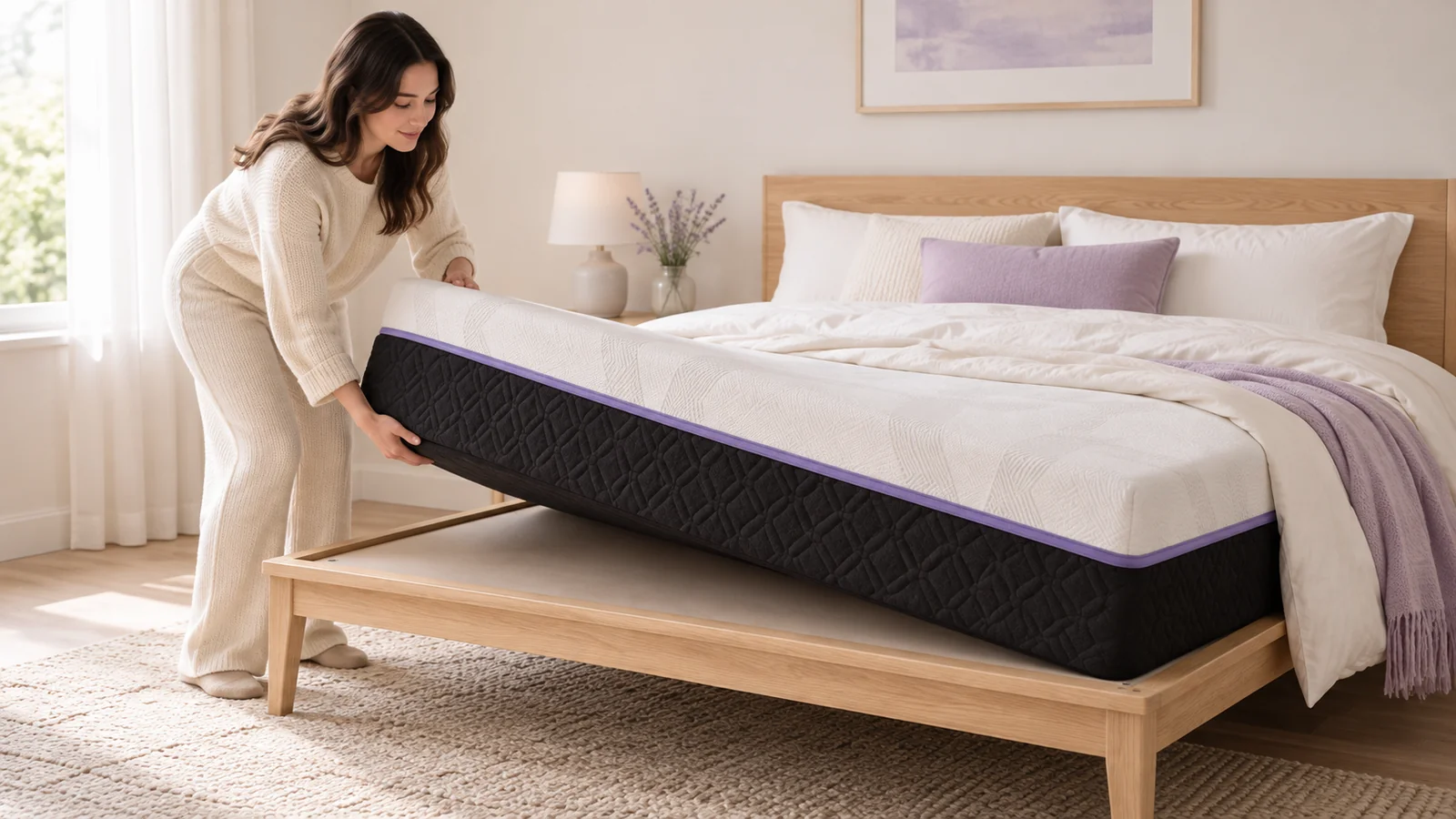
Some mattress warranties require a foundation that provides enough support to keep the mattress flat. Using a weak, damaged, or unsuitable foundation could affect your ability to make a warranty claim.
Juna’s warranty requires the mattress to be used on a firm, flat, non-spring foundation or frame that is strong enough to remain flat under the weight of the mattress and the people sleeping on it.
Both fixed and adjustable frames may qualify when they provide the required support.
Before buying a new mattress, find out whether your current frame meets the manufacturer’s requirements.
If you are unsure, ask before putting the mattress on it.
6. What Can Void a Mattress Warranty?
A long warranty does not mean every type of damage is covered.
Most warranties include exclusions.
Common examples can include:
- Stains
- Burns
- Cuts or holes
- Improper support
- Misuse
- Damage caused while moving the mattress
- Damage caused by storing the mattress incorrectly
Juna states that damage such as stains, holes, and burns can void its mattress warranty. Its warranty also says that a mattress that is not being used should be stored flat.
Keeping your mattress clean and properly supported is not just about making it last longer. It may also help protect your warranty coverage.
A mattress protector can be a simple way to reduce the risk of accidental stains or other damage.
7. Are the Cover, Zipper, and Other Parts Included?
Do not assume every part of the mattress has the same warranty.
Some warranties separate the mattress itself from removable covers, zippers, handles, accessories, or other components.
This is especially important when buying a mattress with removable or adjustable parts.
For example, Juna’s mattress warranty specifically excludes the mattress zipper, zipper mechanism, and removable fabric cover. Damage, stretching, tearing, discoloration, misalignment, normal wear, improper washing, misuse, and customer modifications to those components are not covered by the mattress warranty.
That does not mean the mattress itself has no coverage. It means shoppers should understand which parts fall under which policy.
Read the details instead of assuming everything attached to the mattress is covered for the same number of years.
8. What Happens If You Have a Valid Warranty Claim?
Finally, find out what the company actually does when a covered defect occurs.
A warranty may provide:
- Repair
- Replacement
- Replacement parts
- Store credit
- Partial reimbursement
You should also check whether there are any costs related to the claim.
Ask questions such as:
- Who inspects the mattress?
- Do I need photos or measurements?
- Do I need my original receipt?
- Who pays for transportation?
- Will the mattress be repaired or replaced?
- Are there labor or service charges?
Knowing the process ahead of time can save a lot of frustration later.
Juna’s published mattress warranty states that covered defective products within their applicable 12-year or 18-year warranty period will be replaced without a charge to the customer.
Mattress Warranty vs. Sleep Trial: They Are Not the Same Thing
This is another area that can cause confusion.
A mattress warranty and a sleep trial have different purposes.
A mattress warranty generally deals with defects.
A sleep trial gives you time to decide whether you actually like sleeping on the mattress.
A mattress can be perfectly built and still not feel right for your body.
Juna, for example, offers a 120-night risk-free trial with its own requirements. Juna also has a separate Lifetime Comfort Commitment that allows eligible mattress owners to have the feel of their mattress adjusted over time.
Those programs are separate from the product warranty.
When shopping, look at all three if they are offered:
- The product warranty
- The sleep trial or return policy
- Any long-term comfort or adjustment program
Together, they give you a much better picture of what happens after you bring the mattress home.
A Quick Mattress Warranty Checklist
Before buying a mattress, take a few minutes to find answers to these questions:
- How many years does the warranty last?
- What defects are covered?
- What sagging or body-impression depth qualifies?
- Is the warranty prorated or non-prorated?
- What kind of foundation is required?
- What types of damage can void the warranty?
- Are the cover, zipper, or other components excluded?
- What happens when a valid claim is approved?
If the answers are hard to find, ask the retailer before buying.
A good mattress should be comfortable on night one, but it should also be backed by terms you understand years later.
Have Questions Before Buying a Mattress?
A mattress warranty should not feel like fine print you have to decode after something goes wrong.
If you are considering a Juna mattress, review the official Juna mattress warranty before purchasing so you know how the warranty, sleep trial, and Lifetime Comfort Commitment work.
You can also talk with the Juna team in person.
If you are in western South Dakota, visit the Juna Sleep Systems mattress store in Rapid City to compare mattresses and ask questions about support, construction, warranty coverage, and long-term comfort.
If you are in eastern South Dakota, visit the Juna Sleep Systems mattress store in Sioux Falls for help finding a mattress that fits your sleep style, comfort needs, and budget.
The goal is simple: know what you are buying, know how it is covered, and choose a mattress you can feel good about sleeping on for years.
