
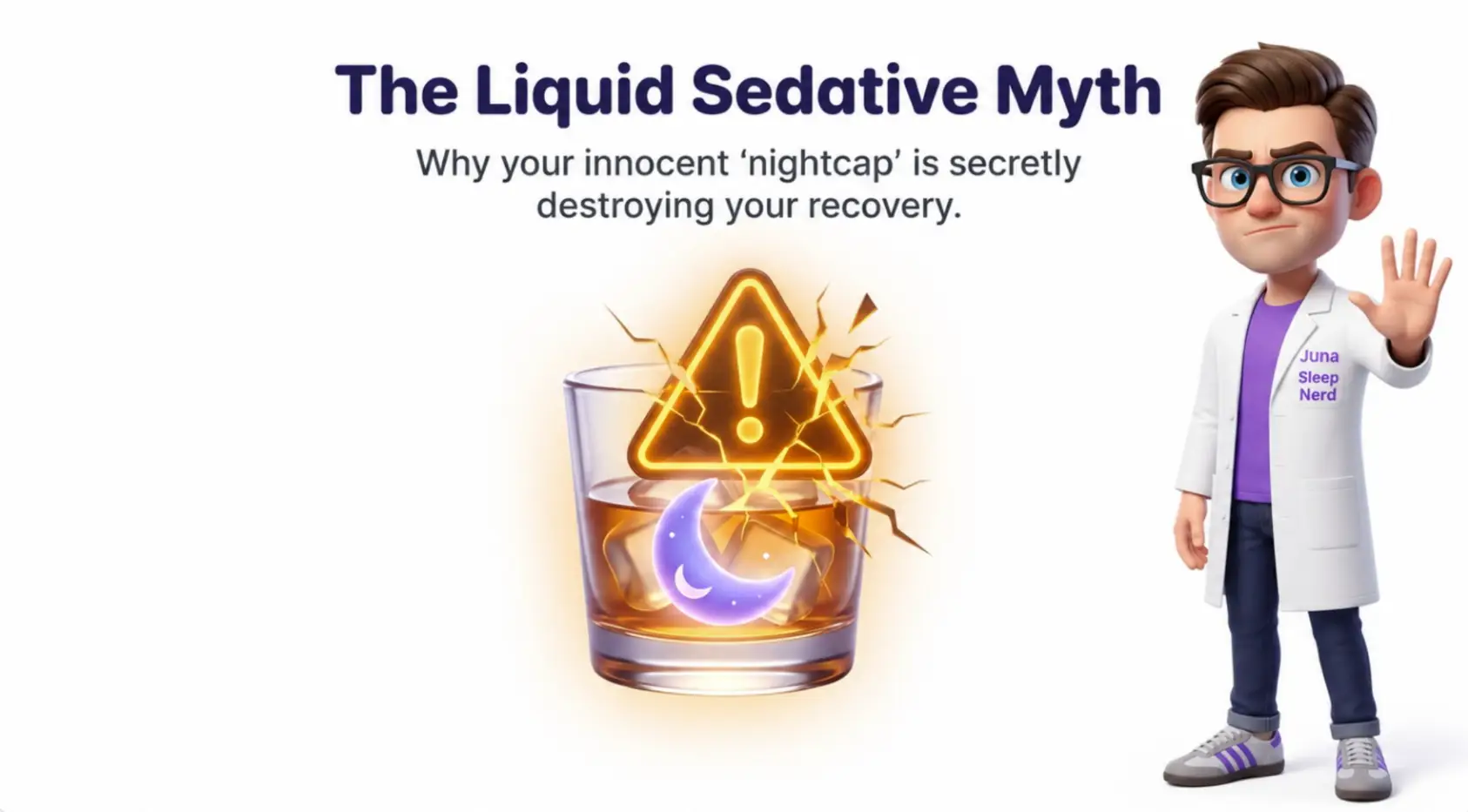
Quick Answer: The Nightcap Deception
Alcohol and Sleep can be a surprising biological bait-and-switch. For centuries, the “nightcap”—a casual glass of wine, a pour of whiskey, or a craft beer before bed—has been viewed as a simple remedy for insomnia. At first glance, it seems to work: after drinking, you may feel relaxed, your eyelids become heavier, and you may fall asleep faster than usual. However, sleep medicine and cognitive neuroscience reveal that this effect is misleading. The relationship between Alcohol and Sleep is more complicated than it appears because the relaxation caused by alcohol is temporary and can disrupt your natural sleep architecture, reducing the quality of rest your body needs for true recovery.
- Sedation is Not Sleep: Alcohol does not induce natural sleep. Instead, it acts as a central nervous system sedative, essentially knocking out your brain cells in a manner similar to low-level anesthesia.
- The Second-Half Crash: As your liver metabolizes the alcohol during the night, your body experiences a chemical “rebound effect.” This spikes your stress hormones, leading to rapid heart rates and dozens of hidden awakenings.
- REM Erasure: Alcohol is one of the most powerful suppressants of Rapid Eye Movement (REM) sleep known to science. It cuts off your dream cycles, which directly impairs your memory, emotional balance, and hormonal health.
Discover (How Alcohol and Sleep Can Be a Surprising Biological Bait-and-Switch )
Introduction: The Liquid Sedative Myth
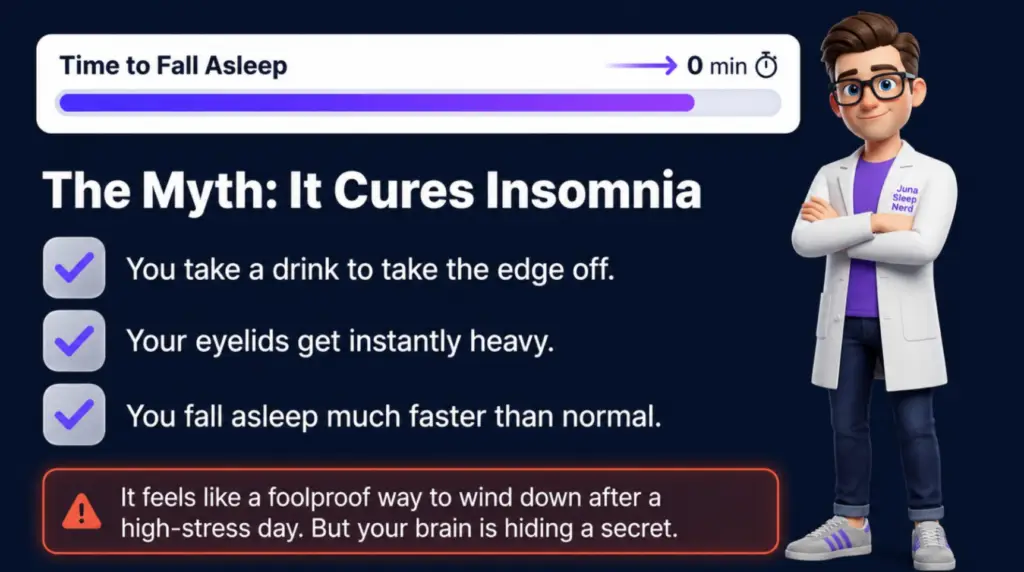
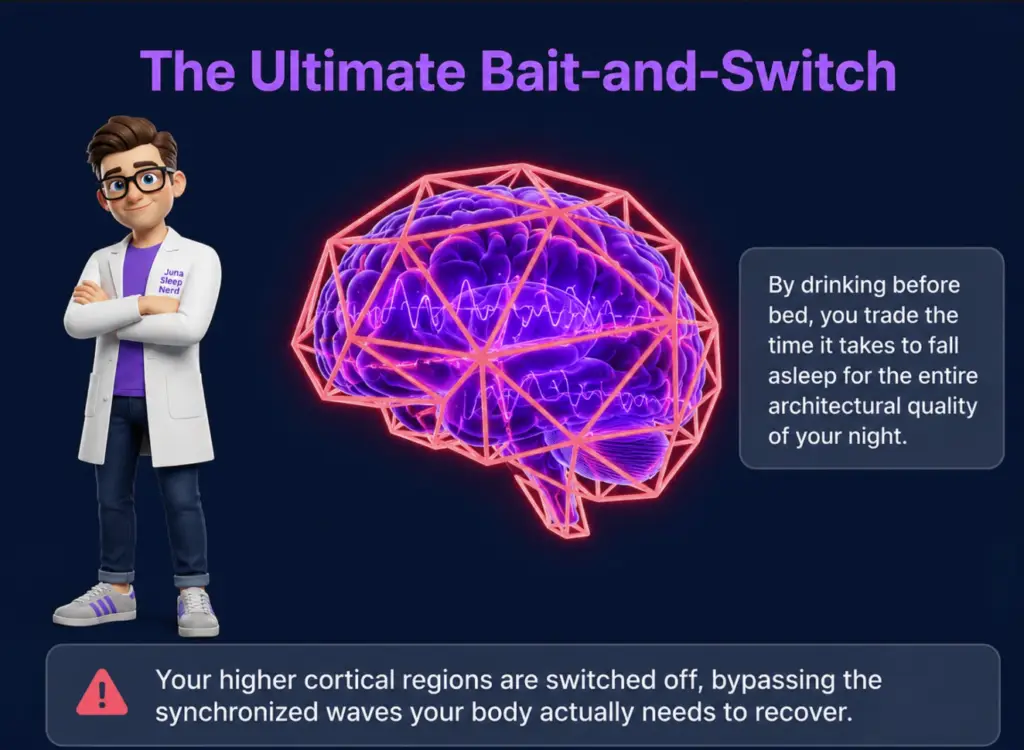
We live in a culture that treats alcohol as a universal wind-down tool. After a high-stress workday or a grueling physical training routine, reaching for a drink to “take the edge off” feels completely natural. Because alcohol quickly depresses the central nervous system, it undeniably shortens your sleep latency—the time it takes for your head to hit the pillow and your conscious mind to fade away.
But falling asleep quickly is not the same thing as sleeping well.
The connection between Alcohol and Sleep reveals a surprising truth: while alcohol may help you fall asleep faster, it can interfere with the deeper processes that make sleep restorative. At Juna Sleep Systems, we build mattresses based on the absolute reality of human biology. True sleep is a highly active, beautifully coordinated series of neurological states that repair your muscles, balance your hormones, and clean out cellular waste. Alcohol breaks this system apart.
Whether you are trying to stay sharp in your professional life or visiting one of our local factory showrooms in Sioux Falls, South Dakota, or Rapid City, understanding how Alcohol and Sleep interact with your sleeping brain is the first step toward reclaiming genuine health.
Discover (the Liquid Sedative Myth: Why Alcohol Is Not a True Sleep Aid)
Sedation vs. Natural Sleep: The Chemistry of Consciousness Suppression.
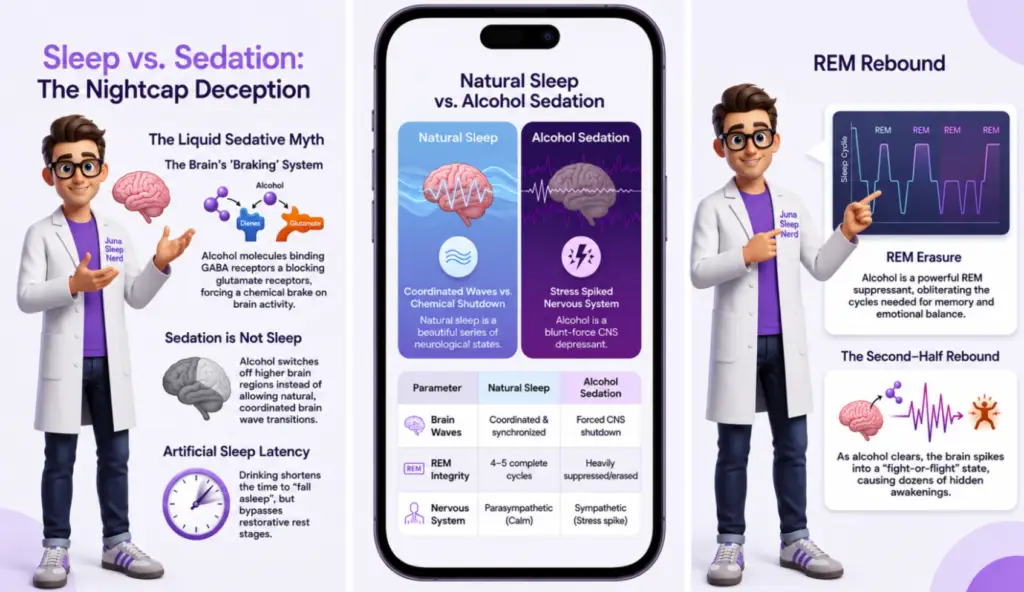
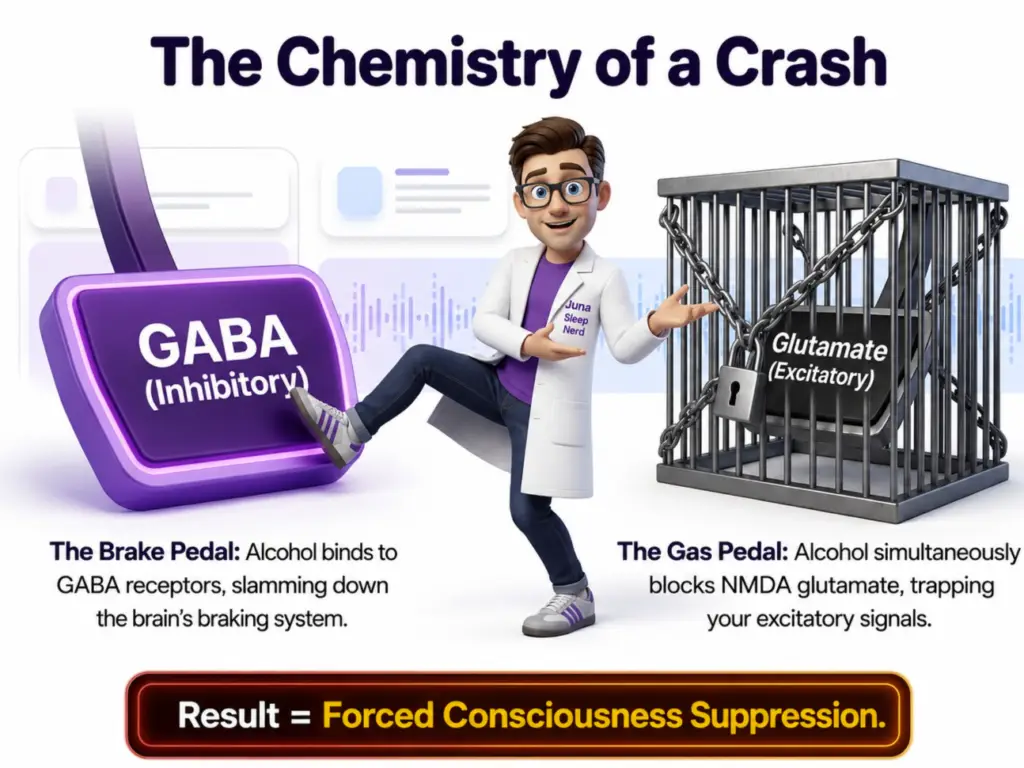
To understand why alcohol is a sedative, not a sleep aid, we have to look at the brain’s neurotransmitters. The connection between Alcohol and Sleep begins with the way alcohol affects the brain’s chemistry. Alcohol is an institutional copycat. It binds directly to your GABA<sub>A</sub> receptors—the brain’s primary inhibitory channels—while simultaneously blocking excitatory NMDA glutamate receptors.
In simple terms, alcohol turns up the brain’s braking system while turning down the gas pedal.
(Alcohol Consumption)
│
├──► [Stimulates GABA Receptors] ──► Brain Activity Slows Down
│
└──► [Blocks Glutamate Receptors] ─► Excitatory Signals Cease
▼
(Central Nervous System Sedation) (NOT Natural Sleep)
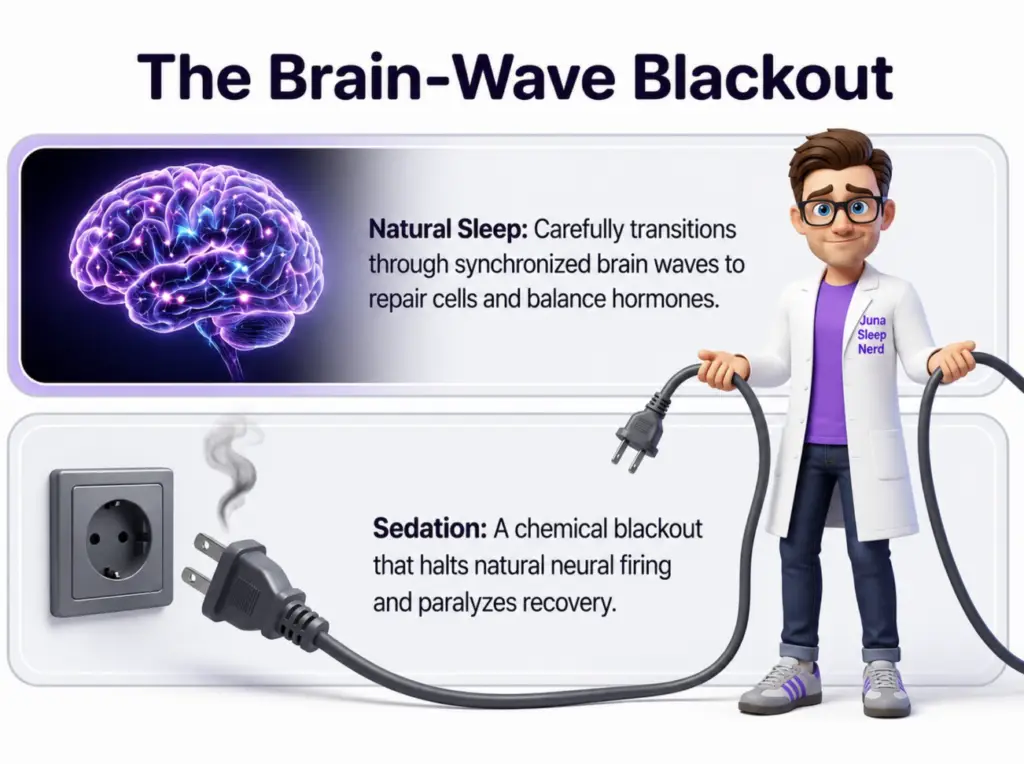
This chemical shift causes your brain cells to stop firing normally, bringing on a state of sedation. But sedation is not sleep. Understanding Alcohol and Sleep requires recognizing that sedation and true restorative sleep are two completely different biological processes. Natural sleep requires a highly organized transition of synchronized brain waves, moving carefully from light stages into the deep slow oscillations of Stage N3 sleep.
Alcohol simply switches off your higher cortical regions. It forces your brain into an unnatural state that looks less like healthy rest and more like low-level medical anesthesia.
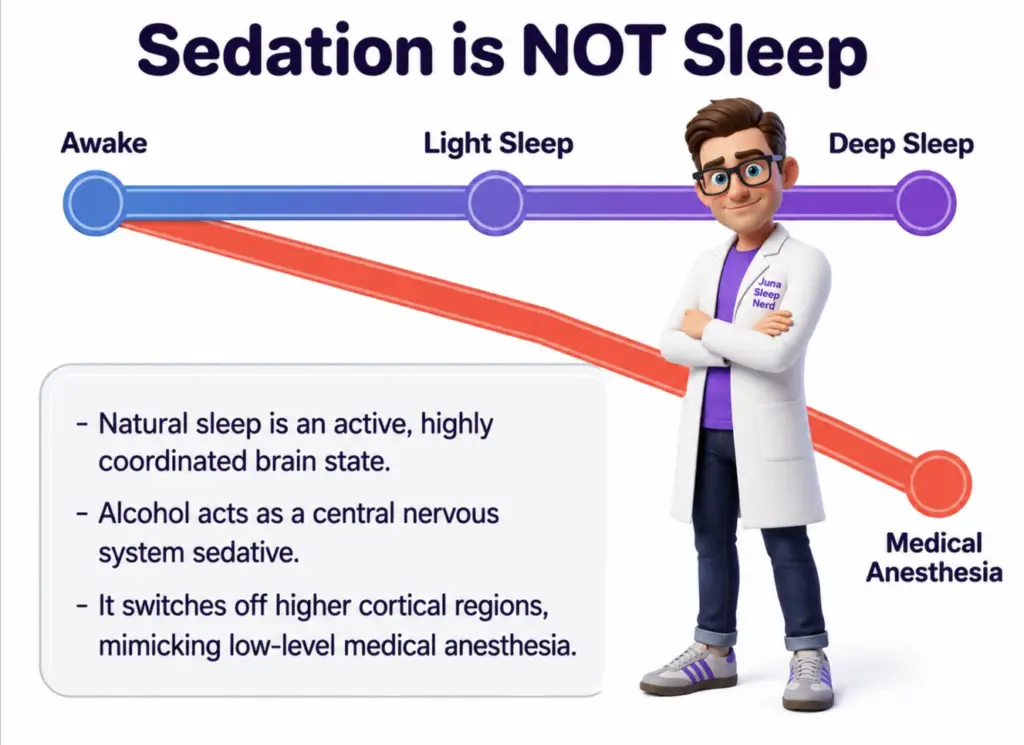 Visualizing the fundamental neurological differences between natural sleep progression and sedative-induced sedation, by JUNA Sleep Systems.
Discover ( the Science Behind Sedation vs. Natural Sleep )
The Second-Half Rebound: How Metabolism Fragments Sleep
The true damage of alcohol reveals itself in the second half of the night, driven by your liver’s metabolic timeline. The connection between Alcohol and Sleep becomes especially clear during this phase, as the body begins processing and removing alcohol from the bloodstream. On average, the human body processes alcohol at a rate of about one standard drink per hour. As your liver breaks down the ethanol, it converts it into acetaldehyde—a highly toxic compound—before converting it into acetate.
As the alcohol clears out of your system, your brain experiences a sudden chemical reversal known as the glutamate rebound. After being suppressed for hours, your brain’s excitatory glutamate system spikes back to life.
Simultaneously, your sympathetic nervous system—the fight-or-flight drive—surges.
This chemical rebound drastically fragments sleep. It triggers a wave of micro-arousals, forcing your brain out of deep rest and into light, volatile stages of sleep or brief awakenings.
Because these awakenings are often only a few seconds long, you typically won’t remember them the next morning. However, they destroy your sleep continuity, leaving you waking up feeling exhausted, dehydrated, and unrested. This is one of the main reasons why Alcohol and Sleep are so closely connected when discussing poor sleep quality and recovery.
Discover ( How the Second-Half Rebound Fragments Your Sleep)
Duration of REM and Dream Sleep
While alcohol degrades all stages of rest, it has a particularly damaging effect on REM sleep. The connection between Alcohol and Sleep becomes especially important when examining REM cycles. Rapid Eye Movement sleep, which occurs mostly during the early morning hours, is the phase where your brain processes emotions, integrates memories, and clears away psychological stress.
Alcohol suppresses REM sleep through two distinct mechanisms:
Adenosine Accumulation: Alcohol artificially boosts adenosine levels (the chemical marker of sleep pressure). While this helps you drop off to sleep quickly, it disrupts the natural balance between your sleep drive and your internal body clock, blocking the triggers that launch REM sleep.
GABAergic Domination: The sedative pressure of alcohol prevents the brainstem from firing the rapid, low-voltage electrical signals needed to spark vivid dreams and healthy emotional processing.
When you go to bed with alcohol in your bloodstream, your first two or three REM cycles are often significantly disrupted. When your body finally attempts a “REM rebound” in the morning as the sedation wears off, it can cause fragmented, intensely vivid dreams. This leaves your mind without the psychological recovery that healthy sleep provides.
Understanding Alcohol and Sleep is essential because REM disruption affects memory, emotional regulation, and overall brain function.
Snoring, Suffocation, and Airway Collapse
Beyond its chemical impact on the brain, alcohol acts as a powerful systemic muscle relaxant. This relaxation affects every skeletal muscle group in your body, including the delicate tissues of your upper airway, soft palate, and tongue.
The effects of Alcohol and Sleep extend beyond brain activity because alcohol can also influence breathing patterns during rest. Under normal conditions, your airway muscles maintain enough structural tone to keep your breathing passages wide open while you rest. But under the heavy sedative influence of a nightcap, these tissues can relax excessively and narrow the airway.
[Alcohol Sedation] ──► [Airway Muscles Relax] ──► [Tissue Collapses Into Throat]
│
▼
[Oxygen Starvation & Micro-Arousals] ◄── [Severe Snoring / Sleep Apnea Spikes]
This collapse causes the turbulent airflow known as heavy snoring. In more severe cases, it can contribute to airway blockages associated with obstructive sleep apnea.
As your blood oxygen levels fall, your brain stem reacts by triggering brief awakenings that restore normal breathing. This cycle can repeatedly interrupt your sleep, reducing the quality of rest and recovery.
Discover ( How Much Deep, Light, and REM Sleep Your Body Needs )
Somatic Matrix: Natural Architecture vs. Alcohol-Induced Sleep
The following matrix highlights the severe structural breakdown your body and brain experience when comparing natural sleep to a night spent under the influence of alcohol.
| Rest Parameter | Natural Unmedicated Sleep | Alcohol-Induced Sedation |
| Initial Transition | Natural, coordinated brain wave slowdown | Fast, forced central nervous system sedation |
| First-Half Profile | Balanced progression into deep slow-wave rest | Deeply sedated, non-functional delta states |
| Second-Half Profile | Smooth, continuous sleep cycles | High fragmentation via the glutamate rebound |
| REM Sleep Integrity | Fully preserved (4 to 5 complete cycles per night) | Heavily suppressed or completely erased |
| Autonomic Control | Parasympathetic dominance (Calm pulse & low BP) | Sympathetic dominance (Spiked heart rate & HRV crash) |
| Airway Tone | Firm, resilient muscle support | Slack, prone to heavy snoring and collapse |
| Thermal Dynamics | Natural core cooling and temperature drops | Vasodilation, skin warming, and intense night sweats |
Discover ( Natural Sleep Architecture vs. Alcohol-Induced Sleep )
The Thermal Trap: Night Sweats Meet Mattress Heat Retention
One of the most immediate physical side effects of Alcohol and Sleep disruption is the onset of intense night sweats. Alcohol is a potent vasodilator, meaning it forces your blood vessels to expand, rushing warm blood straight to the surface of your skin. This is what causes the classic “warm flush” of drinking.
This skin temperature spike causes a major biological conflict. To enter deep sleep, your body’s core temperature must drop naturally.
By forcing blood to the skin, alcohol causes your body to shed heat rapidly, leading to heavy sweating in the middle of the night.
This is where your choice of mattress becomes a critical factor. If you are sleeping on a standard mass-market bed constructed with low-density memory foam or cheap synthetic fibers, the mattress acts like a giant thermal sponge. It traps the massive wave of heat and sweat radiating from your body, reflecting it right back at your skin.
For people struggling with Alcohol and Sleep, this combination of internal temperature changes and poor sleep environment can make nighttime discomfort even worse.
By 3:00 AM, you find yourself caught in a miserable loop: your body is fighting off a chemical glutamate rebound, your skin is overheating against a hot mattress, and you are soaked in sweat. This combined physical and chemical stress triggers a long, uncomfortable awakening that destroys any remaining chance of restful sleep.
The Juna Shield: Mitigating Toxic Sleep Architecture Disruptions
At Juna Sleep Systems, we recognize that while a mattress cannot change your lifestyle choices or process alcohol for your liver, it plays a massive role in managing the physical environment around you. Understanding the relationship between Alcohol and Sleep is important because the right sleep surface can help reduce external factors that make disrupted rest feel even worse.
Our premium mattresses are engineered to eliminate external comfort threats—like trapped heat, partner motion, and airway alignment issues—that can amplify the damaging side effects of alcohol. While a mattress cannot prevent the chemical effects of alcohol on the brain, it can provide a more supportive environment for achieving higher-quality sleep.
For those struggling with Alcohol and Sleep challenges, improving the sleep environment can be an important step toward creating more comfortable and restorative nights.
Discover ( the Science Behind Toxic Sleep Architecture Disruptions )
Dissipating Metabolic Heat Spikes via Open-Cell Foam Engineering
To break the uncomfortable loop of alcohol-induced night sweats, Juna refuses to use cheap, closed-cell materials that trap heat. Instead, our sleep systems are handcrafted using ultra-premium, high-density open-cell foams ranging from 2.5 lb to 5 lb in density.
The open-cell architecture functions as a built-in, continuous ventilation system. Every time you shift or move, the mattress layers act like a microscopic bellows, pumping hot, humid air away from your body and drawing fresh, cool air in through the mattress core.
Even when your body is dealing with the metabolic heat spikes of a nightcap, our advanced foam layers help keep your skin temperature balanced. This protection minimizes the risk of thermal awakenings and helps preserve whatever precious rest your brain can find.
Isolating Alcohol-Induced Tossing and Turning via the Juna H-Bed
When a co-sleeper consumes alcohol, their second-half glutamate rebound can contribute to a restless night of tossing, turning, and heavy snoring. The connection between Alcohol and Sleep also affects the partner sharing the same bed, as nighttime movement and disruptions can impact both people’s rest.
On a standard innerspring mattress, this constant movement creates physical shockwaves that travel across the entire bed, disrupting the sober partner’s sleep cycles.
The Juna H-Bed is engineered specifically to isolate and neutralize this movement. Built as a single, unified King-sized mattress, the H-Bed features deep vertical expansion cuts at the head and foot of the bed, anchored by a solid, uncut 28-inch central foam bridge.
This creates a complete kinetic barrier between the two sides of the mattress. When one partner is tossing and turning to shake off the effects of a nightcap, the physical movement is fully absorbed on their side of the bed. The other side remains completely still and silent, protecting the innocent partner’s REM and deep sleep cycles from external disruption.
Lifelong Orthotic Customization for Fluctuating System Needs
As your body changes over time due to age, weight shifts, fitness levels, or lifestyle habits, your physical support requirements change as well. A mattress surface that offers great comfort during standard weeks might cause uncomfortable pressure points when your muscles are deeply relaxed by alcohol. If your bed cannot adapt, it will create the exact physical strain that triggers sleep-shattering micro-arousals.
Juna solves this issue completely through our exclusive Lifetime Comfort Commitment. We don’t believe in forcing you to commit to a single firmness level at the cash register.
If your body ever requires an adjustment in support, simply call us up. Our expert Juna Mattress Nerds will come directly to your home, unzip your mattress cover, and physically swap out or re-arrange the internal high-density foam comfort layers on-site. This personalized adjustment ensures your body enjoys perfect skeletal alignment, no matter how your lifestyle habits change over the years.
The Airway Solution: Advanced Adjustable Base Posturing
To combat the airway collapse and severe snoring caused by alcohol’s muscle-relaxing effects, pairing a high-density Juna mattress with our Advanced Adjustable Base is a true game-changer. By using our scientifically designed “Zero Gravity” setting, your body is placed in a weightless, neutral posture that unloads mechanical strain from your frame.
- Expanding Airway Volume: Elevating your head by a calculated 12 to 15 degrees keeps your soft palate and tongue from sliding backward into your throat, dramatically reducing snoring and preventing alcohol-related oxygen drops.
- Easing Heart Strain: Raising your knees slightly above your heart level improves venous blood return, lowering your resting heart rate and helping calm the cardiovascular strain caused by alcohol processing.
- Decompressing Lumbar Pressure: The weightless curve takes all mechanical compression off your lower back, relaxing your paraspinal muscles and silencing bodily distress signals.
Discover ( How Advanced Adjustable Bases Improve Airway Support )
The Factory-Direct Model: Honest Value for Real Somatic Recovery
How is Juna able to combine these premium, commercial-grade open-cell foams into our sleep systems while keeping our pricing honest and accessible? It all comes down to our factory-direct business model. The traditional mattress industry relies on an incredibly bloated supply chain packed with importers, national brokers, distributors, and third-party retail storefronts—with each middleman adding heavy markups to the final price tag. To protect their margins, corporate brands are forced to cut corners on the quality of their interior foams.
At Juna, we cut out the middlemen entirely. We build our mattresses locally and sell them directly to you through our own regional showrooms. This allows us to route our investments away from corporate retail markups and straight into world-class components, including our specialized Infinity Edge support system.
By surrounding our high-resiliency support core with an ultra-firm perimeter rail and a butterfly quad coil unit, we deliver consistent support all the way to the very edge of the bed. You get a reliable, highly breathable sleep surface that protects your physical alignment and supports deep brain recovery, backed by the absolute best value in the industry.
Conclusion: Ditch the Nightcap, Upgrade Your Sanctuary
The science is clear: using alcohol as a sleep aid is a biological illusion. While a nightcap may help you fall asleep quickly, it acts as a sedative that fragments your rest, breaks your sleep architecture, and eliminates your vital REM sleep cycles.
Understanding the connection between Alcohol and Sleep is key to recognizing why true recovery requires more than simply falling asleep—it requires healthy, uninterrupted rest.
To achieve true, life-changing physical and mental recovery, you don’t need a chemical crutch—you need an optimized physical sanctuary. By removing the mattress heat, partner motion transfer, and airway alignment issues that disrupt your night, a custom-built Juna Sleep System gives your body and brain the ideal environment for deep, natural recovery. Stop settling for a sedated night—visit a Juna showroom today and experience the power of true, unmedicated sleep.
Frequently Asked Questions (FAQ)
1. Why does alcohol make me fall asleep fast if it’s bad for sleep?
Alcohol acts as a central nervous system sedative by stimulating inhibitory GABA receptors and blocking excitatory glutamate signals. While this sedation depresses brain activity and helps you fall asleep quickly, it completely bypasses the natural, coordinated brain wave stages required for healthy, restorative sleep.
2. What is the “glutamate rebound,” and how does it ruin my night?
As your liver finishes metabolizing alcohol during the first half of the night, your brain experiences a sharp chemical reversal. Your previously suppressed excitatory glutamate system spikes back to life, flooding your system with adrenaline. This causes your heart rate to climb and triggers frequent, hidden micro-arousals that leave you feeling exhausted.
3. How does alcohol affect my REM and dream sleep cycles?
Alcohol is one of the most potent suppressants of REM sleep known to science. It disrupts your internal body clock and prevents the brainstem from generating the rapid, low-voltage brain waves needed for dreaming. This cuts off your early REM cycles, which directly harms your memory, emotional balance, and focus the next day.
4. Why does drinking before bed cause severe snoring and sleep apnea?
Alcohol acts as a powerful muscle relaxant that causes the delicate tissues in your throat, tongue, and soft palate to go slack. As you breathe, these relaxed tissues collapse into your airway, causing the heavy vibrations known as snoring or completely blocking your breath, which shocks your brain stem awake to gasp for air.
5. How does a sagging mattress worsen alcohol-induced night sweats?
Alcohol causes your blood vessels to dilate, pumping warm blood to your skin and causing heavy sweating. Low-density foam mattresses act like a thermal sponge, trapping this moisture and body heat and reflecting it right back at you. This creates a hot environment that makes a middle-of-the-night awakening inevitable.
6. What makes Juna’s non-prorated mattress warranty different from other brands?
Juna provides a complete 12-year or 18-year non-prorated warranty, meaning your protective coverage value never degrades or depreciates based on how long you’ve owned the bed. Traditional brands often use prorated warranties that force you to pay hefty out-of-pocket fees for repairs or replacements as the mattress ages.
7. How does the Juna H-Bed isolate motion if my partner is tossing and turning?
The Juna H-Bed features a unique “H” structural geometry with deep vertical expansion cuts at the head and foot of the mattress, separated by a solid 28-inch central foam bridge. This design provides absolute kinetic isolation, meaning one partner can shift or toss throughout the night without transferring any physical movement across to the other side of the bed.
Visit a Juna Showroom Near You
Are you ready to optimize your recovery environment and protect your brain from the disruptions of fragmented sleep? Visit one of our three regional factory-direct showrooms today to speak face-to-face with a Juna Sleep Nerd and test a mattress built for your life.
- Juna Sleep Systems – Sioux Falls, SD: Conveniently located for families driving in from Brandon, Harrisburg, or Tea.
- Juna Sleep Systems – Rapid City, SD: Easily accessible for West River communities, including Box Elder, Summerset, and Sturgis.
